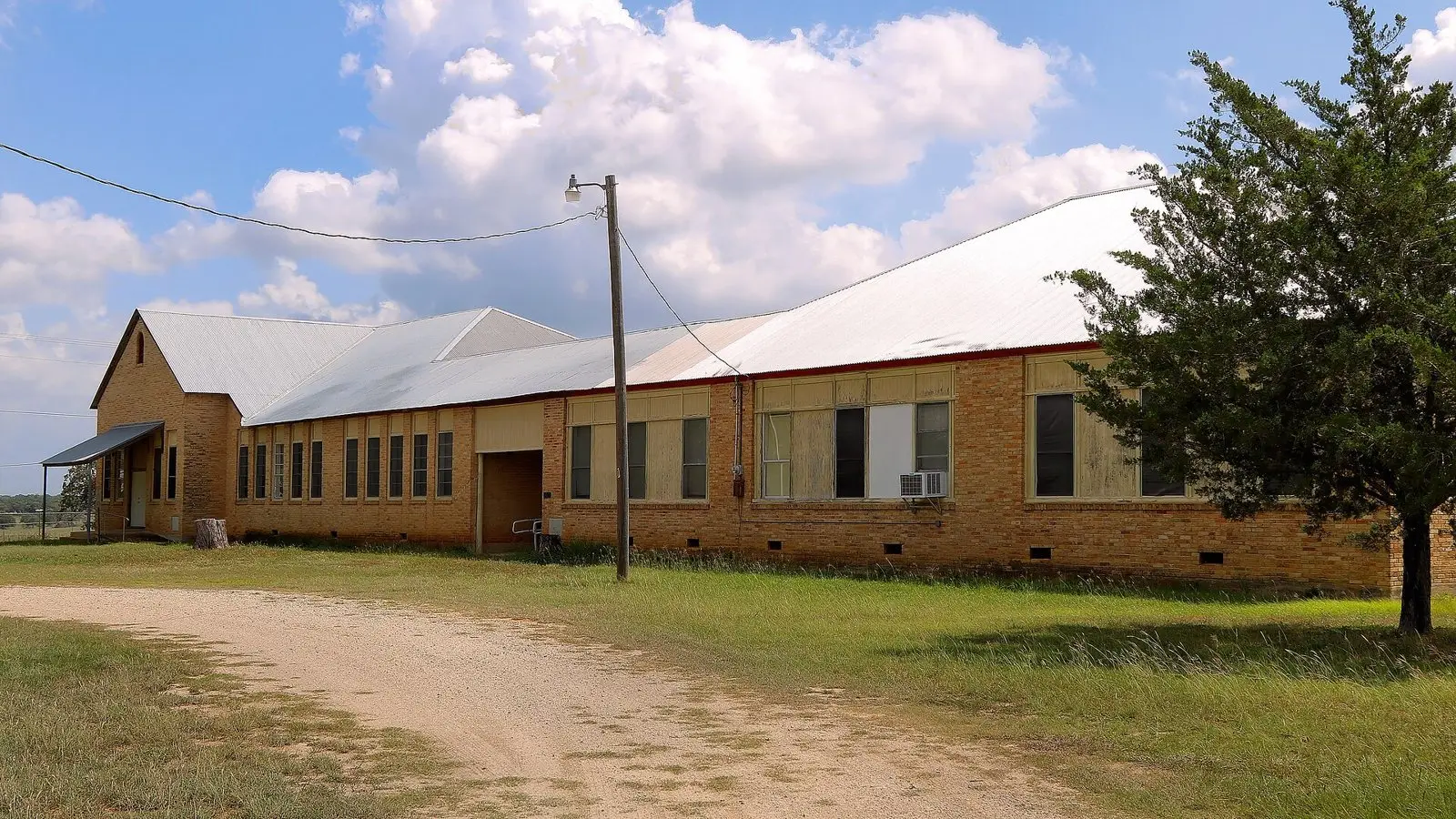
Anne Newland, MD, MPH, led the work that brought a residency in family medicine to northern Arizona, whose first residents arrived in July 2020, and she has held an adjunct clinical appointment at A.T. Still University School of Osteopathic Medicine in Arizona since November 2013. Teaching of that kind often happens far from a teaching hospital. One month the clinic is a room borrowed from a church; the next it is a trailer in a school parking lot, or a mobile unit that looks like a bus. Clinics staffed by medical students rarely own their premises1, run on fixed dates rather than fixed addresses, and exist because their patients have nowhere else to go.
The practice has a name and a definition. Service learning, as the body that accredits American medical schools defines it, is a structured learning experience that joins community service to preparation and reflection, and a 2014 overview in the International Journal of Medical Education2 credited it with helping students gain clinical knowledge, sharpen leadership and communication, and identify health needs in underserved communities. Some schools make it universal: at Tufts, every medical student spends roughly 50 hours working directly in the community3 as a collaborator, mentor or teacher, through a program run with the university's college of civic life.
Where the teaching happens
The commonest setting is the student run free clinic. The most recent comprehensive count, published in JAMA in 2014, found that about three quarters of medical schools in the association of American medical colleges ran one1. Students do the administration, from budgets and scheduling to supplies, interpreters and arrangements for laboratory tests. First and second year students take histories and do initial screening; third and fourth year students, who have clerkship experience, supervise them; physicians are on hand to confirm a diagnosis, write a prescription or make a referral. A pediatric clinic might open monthly while an adult primary care clinic opens every fortnight.
The cases that arrive are often overdue. At the University of Arizona College of Medicine in Tucson, a mother brought her young son to a free clinic for routine vaccinations; the students examining him found signs of anemia, a physician on site confirmed it, and the boy went to hospital for treatment of a condition that had been developing slowly enough to escape notice at home1. Students elsewhere describe the same shift in their own skills, from nervousness about talking to a patient to knowing which questions get to the root of a problem.
The constraints are consistent. Clinic leaders and published studies name the same four: physicians who volunteer are quickly overbooked; outside laboratories cap the number of tests, so patients return for a second appointment; interpreters are scarce enough that a student who speaks the right language becomes a resource; and the churn of student volunteers makes continuity with one provider unlikely, which a 2024 article in the Patient Experience Journal linked to miscommunicated diagnoses and unreviewed medication histories1. One clinic run with the University of California, Riverside, sits about 90 minutes from the medical school, where the choice for many patients is not between that clinic and a better option.
Other placements are curricular rather than voluntary. The Ohio State University College of Medicine builds a year long community project into its curriculum: groups of between four and ten students work with an organization in Columbus, complete a needs assessment, design an activity with community leaders, carry it out and then present what worked and what did not4. Mark Troyer, MD, MPH, who directs the course, says most of medical education shows people only as patients.
“it helps students to see people as people”Mark Troyer, MD, MPH, course director at the Ohio State University College of Medicine, Ohio State University
- 1Pairing A group of between four and ten students is matched with a local host organization.
- 2Needs assessment The students study the organization's community before proposing anything.
- 3Design An implementation plan for a health promoting activity is written with community leaders.
- 4Delivery and reflection The activity runs, then the group presents its struggles and results to other groups.
Distance changes the problem rather than removing it. A 2013 case study of the Oregon Rural Scholars Program followed third year students posted to remote parts of the state who met in a video meeting room for a weekly clinical round with a faculty member5. Coding of the recorded sessions showed the group moving from individual task work toward collaboration, and interviews showed the rounds reducing isolation and shifting students toward rural practice, which the author treats as a way to supply the professional community remote practice has usually denied.
What the placements are meant to teach
The first aim is to make the determinants of health visible. Bridging the Gaps, a program founded 35 years ago, sends medical, nursing, dental and social work students to spend a summer working alongside local groups across Pennsylvania and the southern part of New Jersey, and more than 6,400 people have now been through it6. Donald Schwarz, MD, one of its founding faculty, argues that the lesson institutions take from it is humility: academic health centers look at the need around them and announce what the neighborhood requires, instead of listening first. A documentary filmed with the students records a range of reactions, from shock at the scale of unmet need to hope at seeing a community farm growing food its own residents eat and sell.
The second aim is teamwork across professions. At the Florida International University college of medicine, students begin in their first year in interdisciplinary teams, with trainees in nursing, physician assistant studies, social work and sometimes law, and carry responsibility for one household through three years of medical school7. One fourth year student describes a family of uninsured immigrants in a flooded, termite ridden rental house, where she and a physician assistant student managed medications and nutrition while the social work intern found food banks and eventually a new home. Interprofessional education of that sort gathered force after the 2000 report To Err Is Human attributed 98,000 deaths a year to medical error, including error from poor coordination between professions; a collaborative founded in 2009 by six national health professions associations set out its four core competencies, and a 2024 review found associations with measures such as length of hospital stay and medication errors.
Schools are also being pushed to coordinate their own efforts. An initiative the association of American medical colleges launched in February 2017, funded by the federal agency for healthcare research and quality, put eight institutions through three years of meetings to build a system linking clinical care, research and teaching to community partners, with the community health needs assessment at its center8. Its organizers describe programs to reduce inequity as too often cordoned off from the rest of an institution.
The evidence for student benefit is better than the evidence for community benefit. A survey at Rush Medical College found at least nine in ten participants saying their community work reinforced what they had learned in class or in clinical training, and program leaders there plan focus groups with residents precisely because that side of the ledger is thinner2. Studies cited alongside the clinics make the same point: research on health outcomes for the patients those clinics serve remains fragmented1.
What students learn outside the hospital is therefore partly clinical and partly a correction. They learn to take a history in a borrowed room, to work with people whose training differs from theirs, and to ask why a patient arrived late rather than resenting the delay. The same habits carry into the years described in Medical Students Today and Osteopathic Medicine, and the hub for this cluster is Medical School and Osteopathic Medicine.
| Student run free clinic | Longitudinal household team | |
|---|---|---|
| Who takes part | Students across the years, with volunteer physicians on site | Medical students with trainees in nursing, social work and other fields |
| How long it lasts | Fixed clinic dates, monthly or fortnightly, with volunteers turning over | One assigned household followed for three years of medical school |
| What the student does | Screening, histories, operations and interpreting under supervision | Treatment planning with the team, from medications to benefits and housing |
References
- Student run free clinics fill gaps for patients in need, as medical students find meaning in service. Association of American Medical Colleges, 2026.
- Service Learning Plays Vital Role in Understanding Social Determinants of Health. Association of American Medical Colleges, 2018.
- Community Service Learning. Tufts University.
- Service learning program gives medical students access to community based educational experiences. Ohio State University.
- Exploring Online Community Among Rural Medical Education Students: A Case Study. Portland State University.
- To become better health care providers, students commit their hearts to community work. Association of American Medical Colleges, 2026.
- How interprofessional education became a bedrock of medical training. Association of American Medical Colleges, 2026.
- Medical Schools, Teaching Hospitals Partner With Community to Move Toward Health Equity. Association of American Medical Colleges, 2018.
Further reading online
- Association of American Medical CollegesStudent run free clinics fill gaps for patients in need, as medical students find meaning in service
- Tufts UniversityCommunity Service Learning
- Ohio State UniversityService learning program gives medical students access to community based educational experiences
- Portland State UniversityExploring Online Community Among Rural Medical Education Students: A Case Study
Related entries
Viruses as Gene Delivery Tools
Delete the genes a virus needs to multiply, insert a human gene, and measure how long the cell reads it.
Osteopathic Medicine
Two sets of letters, one licence to practise, and a tradition that now trains a quarter of American medical students.
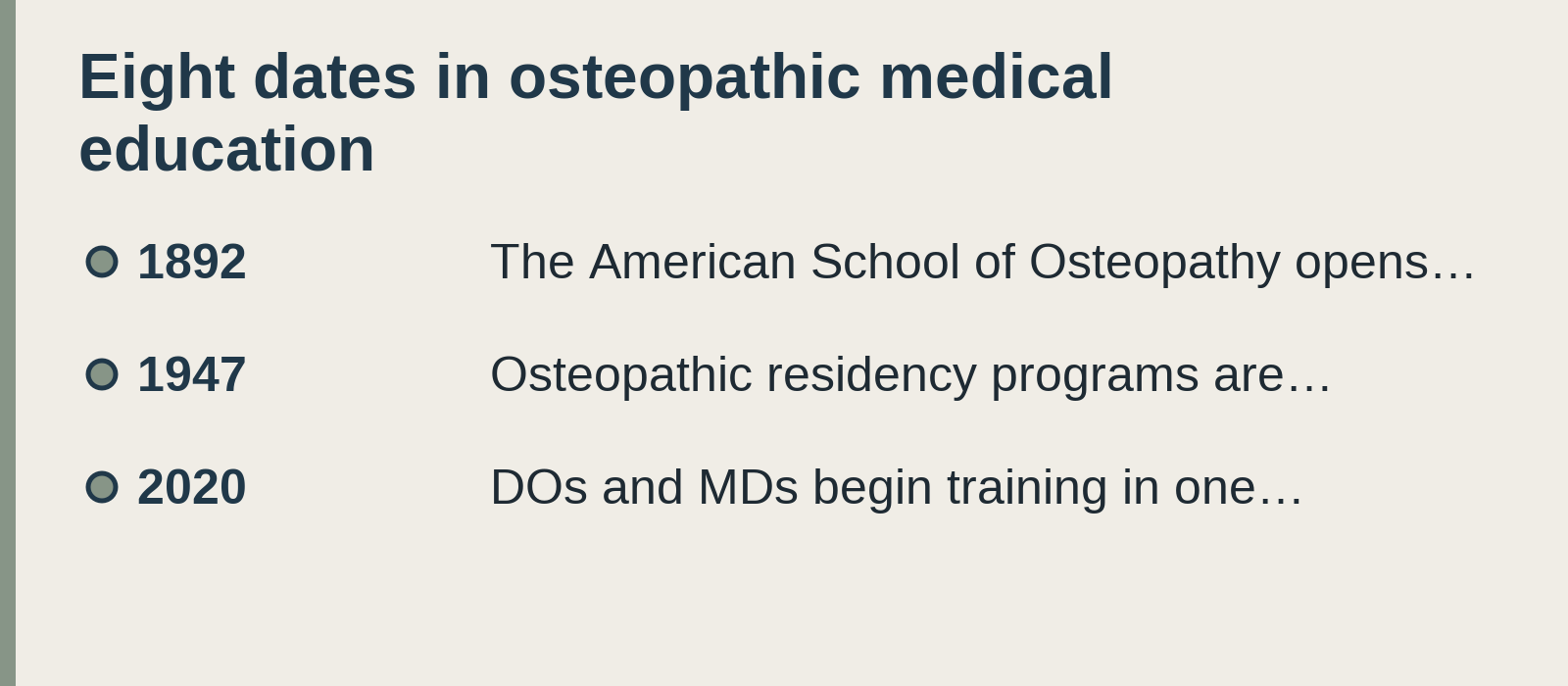
The History of Osteopathy
A Missouri school of 21 students in 1892, a diploma mill in 1895, and a profession of nearly 149,000 physicians.


