
Transgender Health
Anne Newland belongs to the World Professional Association for Transgender Health and has said she hopes to write and speak on the health humanities, on the health of transgender people and on gender affirming care. The entries gathered here treat transgender health as a part of ordinary primary care: the forms, conversations, standards and training that decide whether a transgender patient is well served close to home.
The center of gravity has moved toward general practice. In 2019, STAT reported that the American College of Physicians had published its first transgender care guidelines, written for internists and family doctors rather than the endocrinologists to whom patients were once referred. The same report put the number of transgender adults in the United States at about 1.4 million, and it observed that internists, who often know their patients for years, may be the first clinicians to hear about a patient's gender identity. How clinics prepare for that is the subject of caring for transgender patients, and the professional guidance behind it is traced in the Standards of Care.
Teaching is the other half. A 2016 STAT report followed Project ECHO, a New Mexico program that coaches primary care clinicians by video, as specialists helped a rural nurse practitioner manage a transgender patient with several serious conditions. Family physicians can also turn to the AAFP's clinical toolkit, which gathers training modules, terminology guides and advice on keeping sensitive services private in billing. Medical school curricula, hospital training and mentoring are covered in training clinicians in transgender health.
Two entries look at language. Gender incongruence in the ICD describes the World Health Organization's decision to take gender identity out of the chapter on mental disorders, and talking with transgender patients gathers what patients say helps during a visit. The Every entry page lists all entries across the site.
What this subject covers
5 entries, every one cited and illustrated.

Caring for Transgender Patients
Why family doctors and internists, not only specialists, are expected to welcome and treat transgender patients.
Standards of Care for Transgender Health
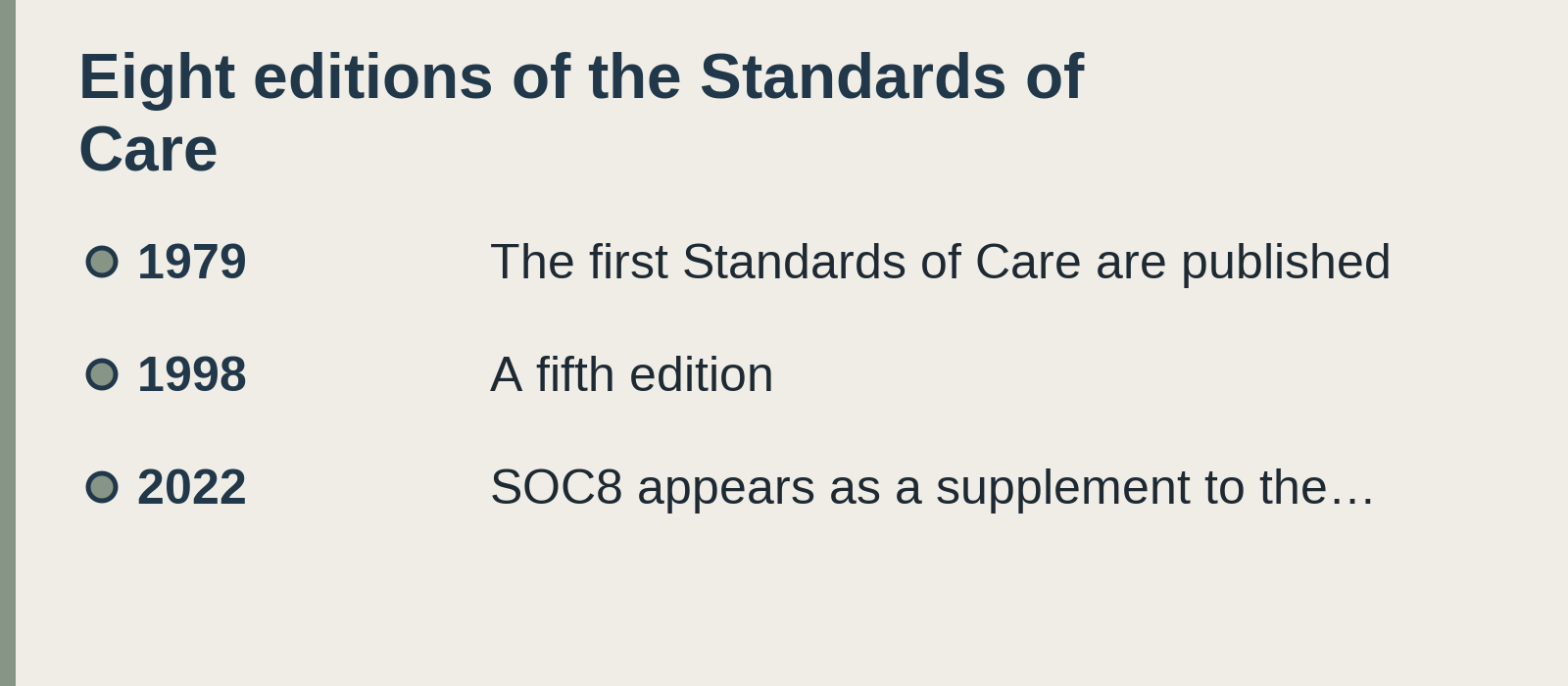
Eight editions of clinical guidance in four decades, and the other guidelines that sit beside them.

Training Clinicians in Transgender Health
From a few lecture hours to required hospital sessions and video mentoring, and why the gaps show up in patients' health.

Gender Incongruence in the ICD
The World Health Organization's disease codes, the old categories for gender identity, and the new chapter that replaced them.
Talking With Transgender Patients
Names, pronouns, relevant questions and plain words: what patients say makes a clinical conversation about gender work.


