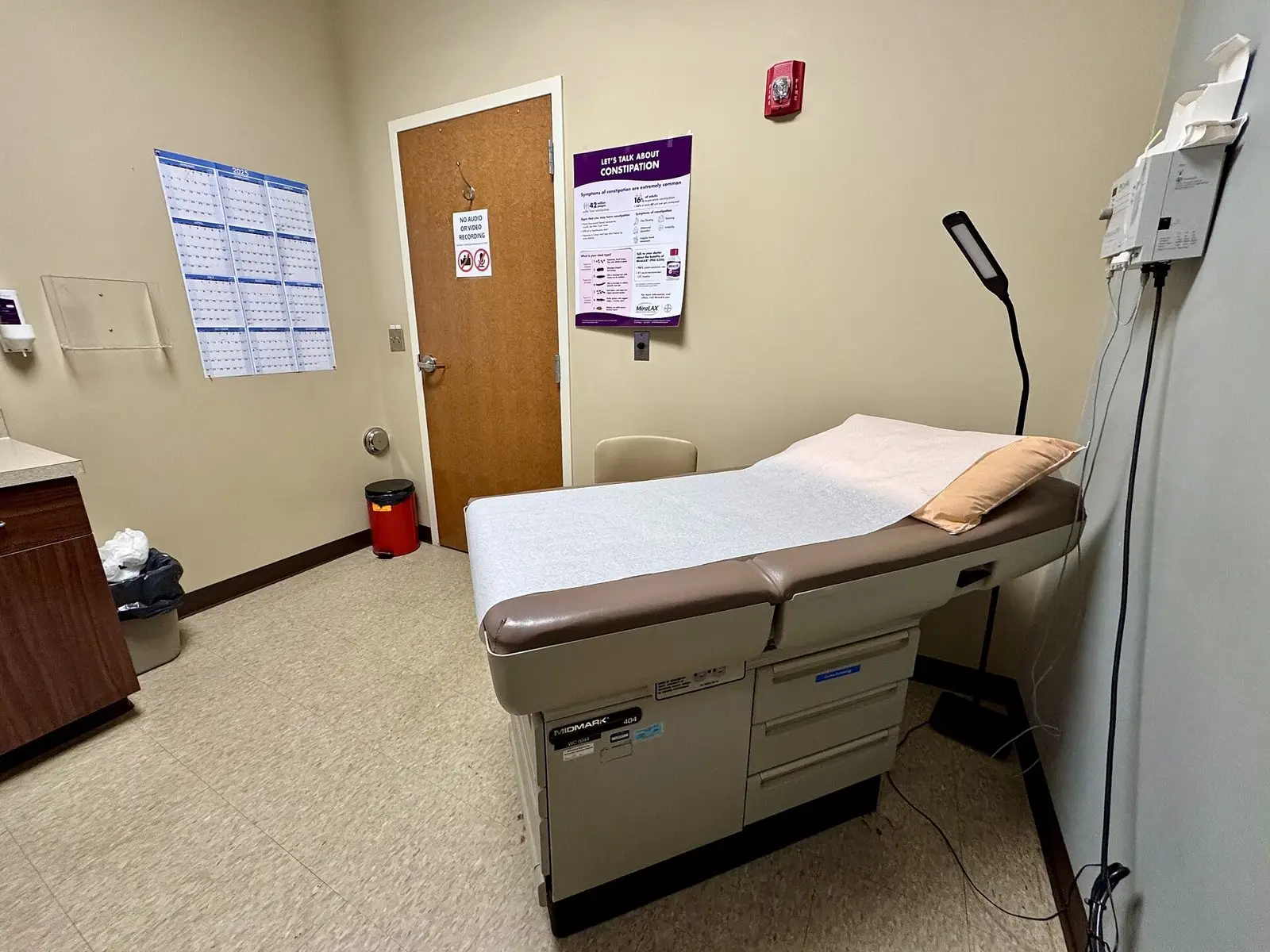
Improving Care in Clinics
Anne Newland came to clinic improvement from two directions, first as the executive clinician for improved patient care in a collaborative of the Indian Health Service and the Institute for Healthcare Improvement, and later as a chief medical officer whose responsibilities included quality improvement across an entire system. She also led a network of community health centers across northern Arizona, with hundreds of staff caring for tens of thousands of patients. The entries in this section explain the methods and settings behind such work: quality improvement collaboratives, patient safety, the redesign of primary care teams and the community health centers that carry primary care into rural and tribal places.
The modern field has a birth year. In 1999 the Institute of Medicine published To Err Is Human, and a 2018 STAT essay by two safety leaders at Nationwide Children's Hospital recalls that until then most physicians assumed errors were rare, did no harm or could not be avoided. The response, which those authors call Safety I, studies what went wrong and redesigns the process so it does not happen again. Their proposed complement, Safety II, studies the ordinary shifts when things go right.
Progress has been slower than hoped. Leaders of the federal Office of Inspector General, writing in STAT in 2022, recall that their office reported in 2010 that 27 percent of Medicare patients had been harmed in the hospital, and that the same method applied to stays a decade later found 25 percent. Both times almost half of that harm was judged preventable, and medication caused 43 percent of the events in the newer study.
Improvement work can misfire as well. A Massachusetts General Hospital lung and critical care physician, writing in STAT, described a quality project that loaded clinicians with hours of record review on their own time, and argued that this administrative harm deserves the same reporting and prevention as clinical harm. He urged that administrators, technology staff and full time clinicians design such projects together.
Each entry on the site, in this cluster and the others, is listed on the Every entry page.
What this subject covers
4 entries, every one cited and illustrated.
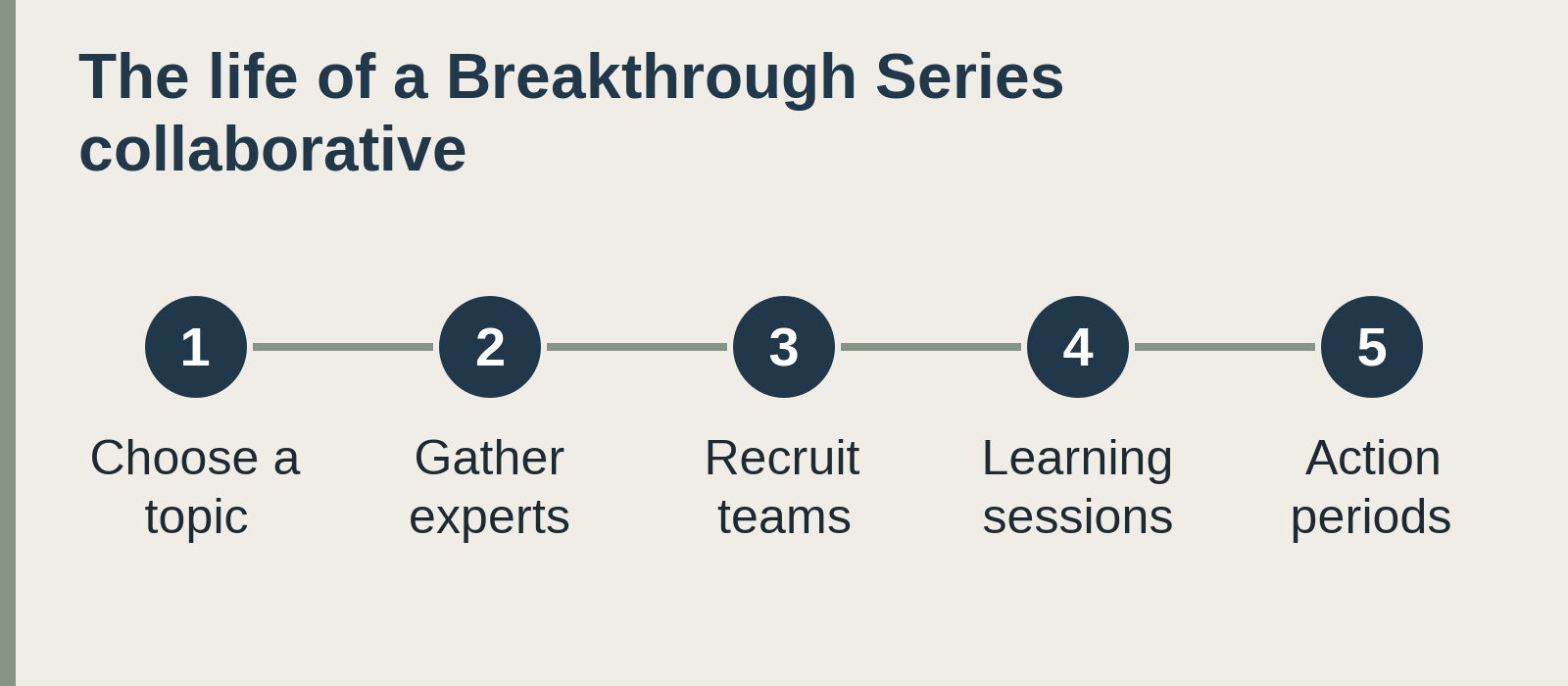
Quality Improvement Collaboratives
Why clinics that improve side by side, with shared data and deadlines, tend to move faster than clinics working alone.
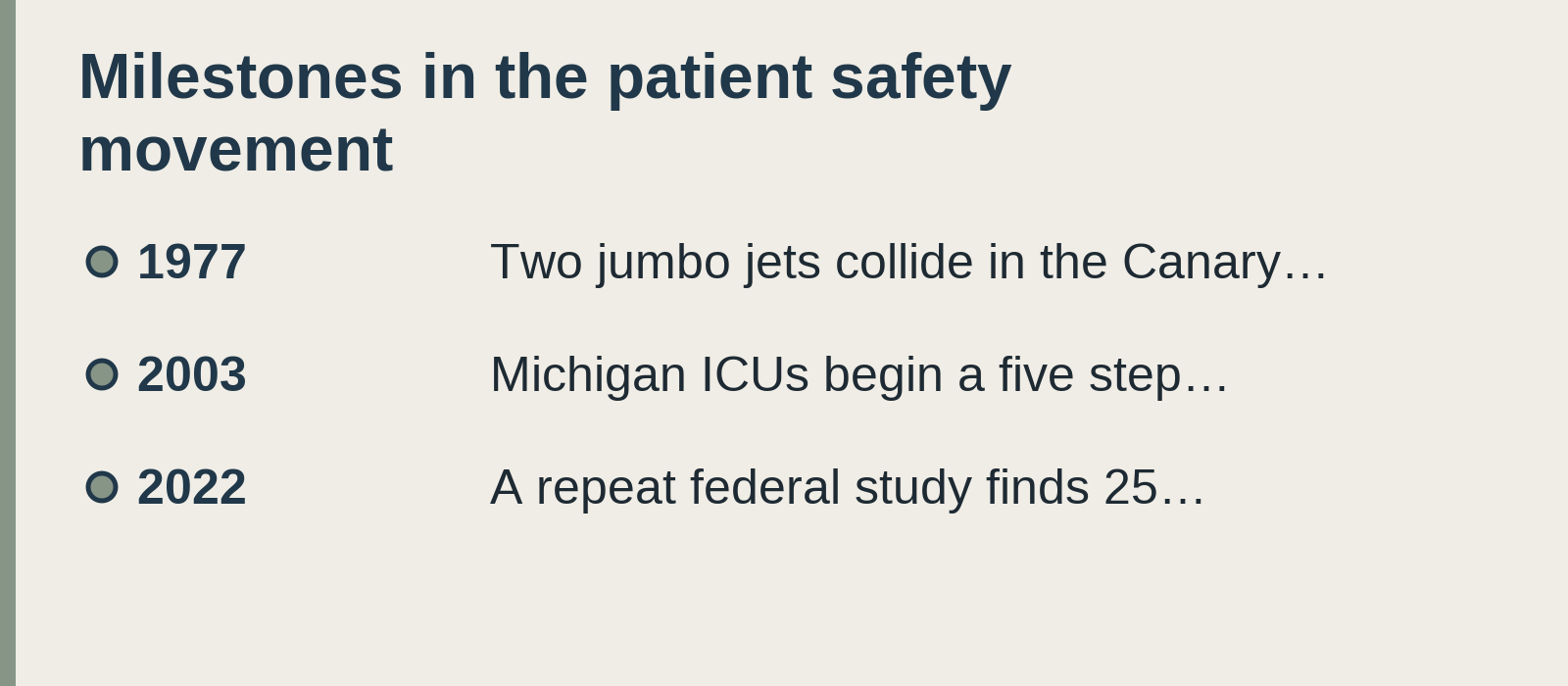
Patient Safety
Cockpit habits, a five step checklist and a duty to speak up reshaped how hospitals think about harm.
Redesigning Primary Care Teams
Shorter visits, same day appointments and shared roles: what changes when a clinic redesigns its primary care.
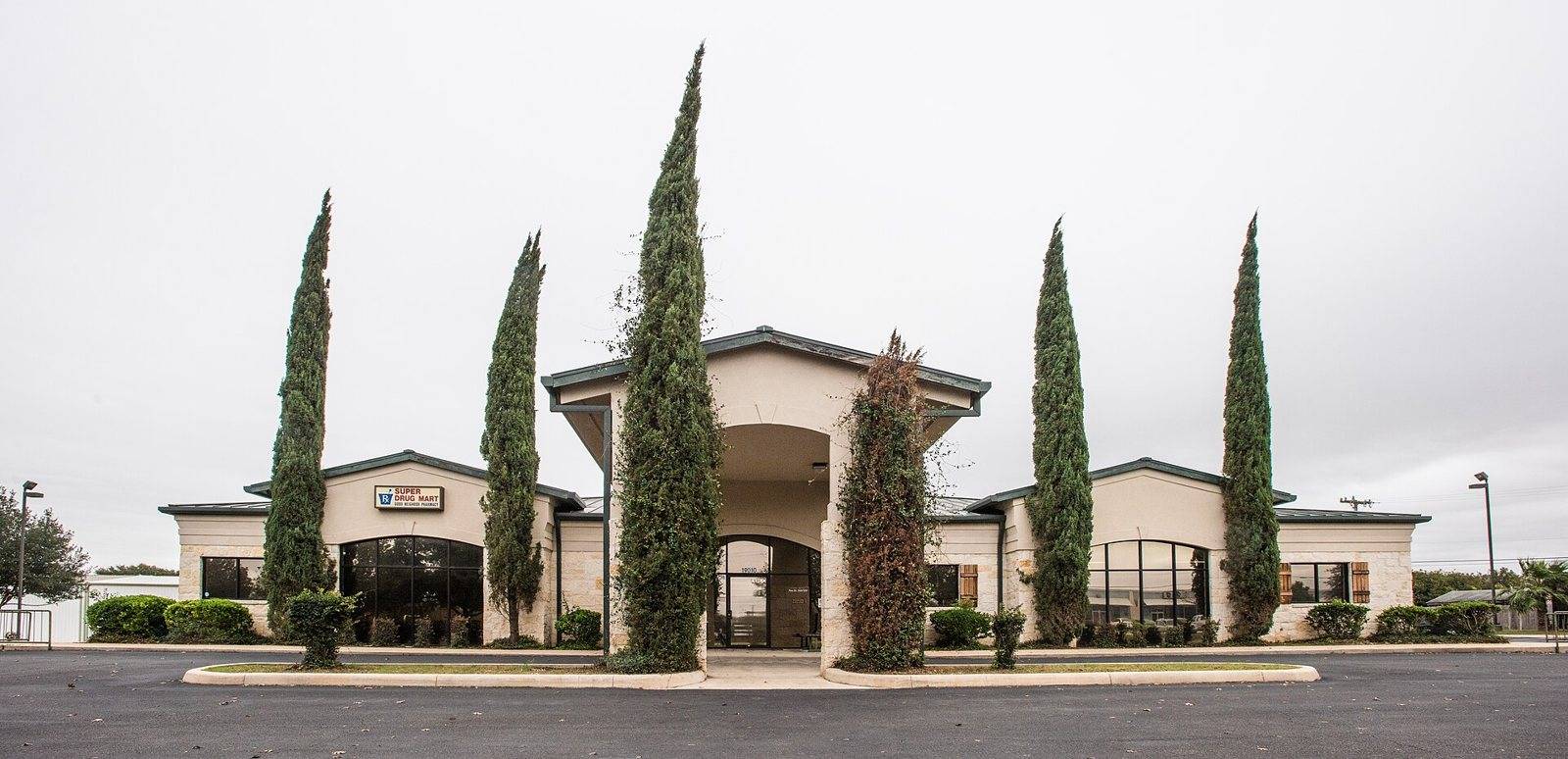
Community Health Centers
Clinics shaped by the people they serve, and the students and clinicians who learn their work in them.


