On Sunday mornings from 1987 to 1990, Anne Newland played gospel records over WKCR as host of Amazing Grace, featuring groups such as the Swan Silvertones and the Caravans. The music on those records has a documented history of roughly a century, from the spirituals and the church songwriters of the early 1900s to concert halls, nightclubs and the pop charts.
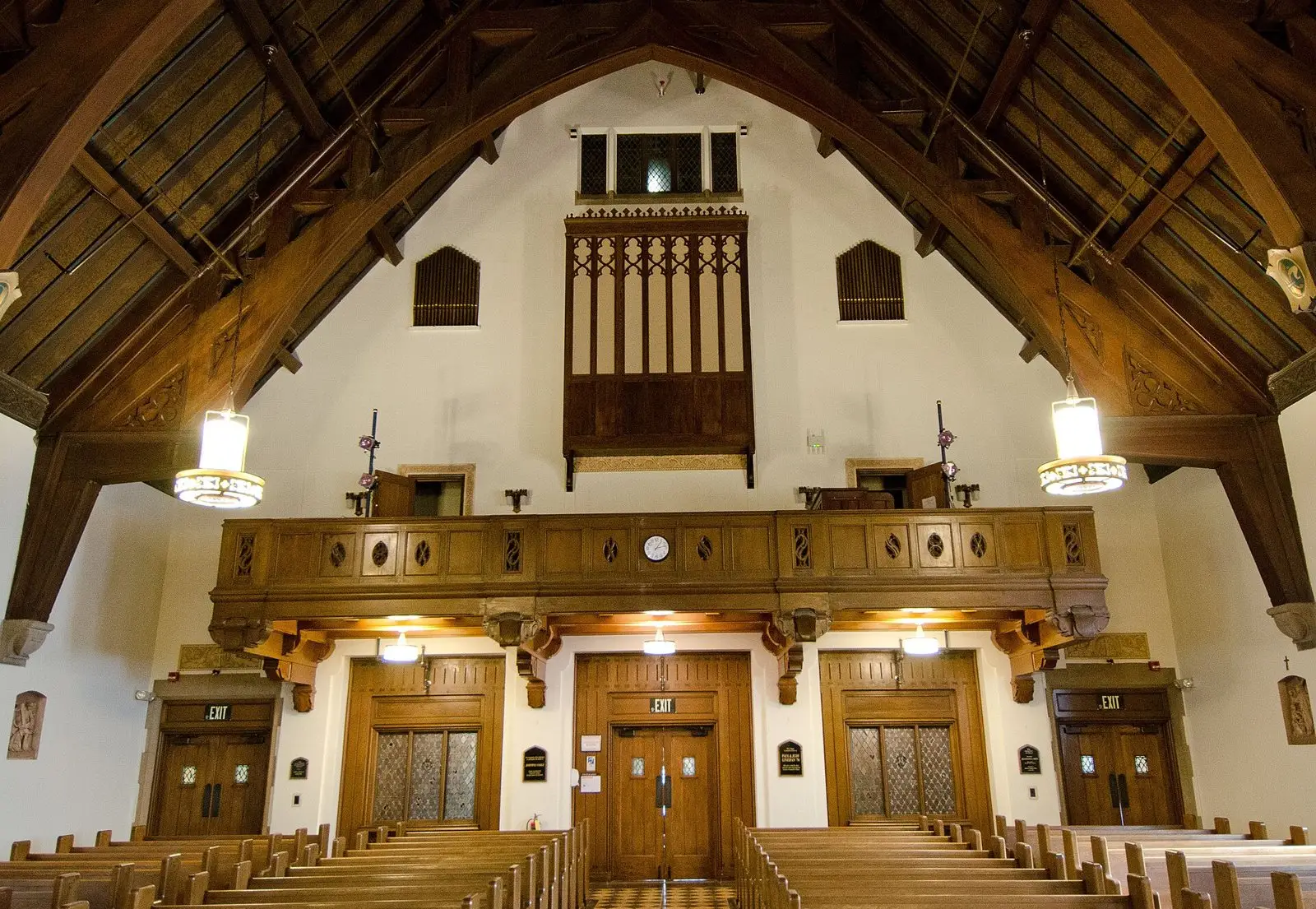
A church choir rehearsing on a weeknight works with materials that Britannica's summary traces to Pentecostal worship1. Pentecostal congregations read the psalm calling on everything that breathes to give praise as permission to bring timbrels, pianos, banjos, guitars and even brass into services, and their choirs set the highest and lowest female voices in call and answer against the preacher's sermon. Recorded sermons by Pentecostal preachers sold widely among Black listeners in the 1920s. Gospel, in Britannica's account1, also drew on spirituals and the blues, on wandering street preachers with acoustic guitars, and on male quartets whose acts included dance steps and matching costumes, the subject of the gospel quartet.
From spirituals to gospel songs
Gospel came out of the Black church, chiefly the Baptist and Holiness congregations, and its roots lie in the spirituals, which the Howard University scholar John Lovell Jr. traced back to West Africa, according to a 1975 New York Times report on a tribute to Mahalia Jackson2. Lovell drew a clear line between the two forms. Spirituals were made and passed along by the folk themselves, while gospel songs were written by known composers and spread through waves of evangelical enthusiasm.
Who made the change is disputed. Some credit the primitive Baptist churches of the South; others credit the Rev. Charles A. Tindley, a Methodist minister in Philadelphia whose most productive years of writing ran from 1901 to 19062. Lovell reported wide agreement that Thomas A. Dorsey was the main force, folding tabernacle songs and blues touches into the spiritual. Dorsey had played piano behind the blues singer Ma Rainey and wrote Precious Lord, and Britannica credits him with coining the term gospel for the music1. Sallie Martin made her debut around 1932 in Chicago with a group Dorsey led, and one of her later accompanists, Ruth Jones, became famous as Dinah Washington2.
| Spiritual | Gospel song | |
|---|---|---|
| Who made it | Created by the folk | Written by known individuals |
| How it spread | Passed along by the folk themselves | Carried by waves of evangelical fervor |
| What it drew on | Roots Lovell traced to West Africa | The spiritual, modernized, with blues touches from Dorsey |
“a modernity in form, content and beat”John Lovell Jr., as quoted in The New York Times, 1975, The New York Times
Singers who took gospel to the stage
Sister Rosetta Tharpe, born Rosetta Nubin in 1915, grew up in the Church of God in Christ, where Katie Bell Nubin, Rosetta's mother, was an evangelist, singer and mandolin player3. Rosetta played in church as a small child and was touring the South with an evangelical troupe by age six; mother and daughter later used the 40th Street Church of God in Christ in Chicago as a home base. In the 1930s Tharpe's performances carried gospel into nightclubs and theaters1. The Smithsonian's National Museum of African American History and Culture holds her 1959 Mercury album The Gospel Truth, recorded live at the Gospel Temple Church of God in Christ in Harlem with the Sally Jenkins Singers and the church organ, as its catalog record3 describes.
Mahalia Jackson, born in New Orleans on October 26, 1911, moved to Chicago in 1927 during the Great Migration and built a reputation in churches across the country, according to the museum's profile of Jackson4. Her 1948 Apollo recording of Move On Up a Little Higher sold in the secular market as no gospel song had before. In 1954 she began hosting a Sunday night radio show for CBS, and a 1956 appearance on The Ed Sullivan Show brought gospel to a national television audience. She recorded Black, Brown and Beige with Duke Ellington in 1958, the year of a Newport Jazz Festival set that the Times still remembered in 19752. She mostly refused offers to sing secular music, and in 1997, 25 years after her death, she entered the Rock and Roll Hall of Fame4.
Gospel's move into secular rooms caused friction. At the fifth New York City Gospel Music Festival in June 1963, held at the New York Coliseum with nearly 500 singers, the program book condemned the recent fashion for gospel in nightclubs, and the master of ceremonies, Joe Bostic Jr., called the trend a mockery5. The festival had spent three years at Madison Square Garden and one on Randalls Island, and that year its award for the best record went to the Swan Silvertones. In 1975 Joseph Bostic Sr., who had taken Jackson to Newport, said devout listeners treated singers who went pop as disloyal2. Records stayed steady sellers: the Rev. James Cleveland's Peace Be Still on Savoy, recorded in 1963, was still selling 75,000 to 100,000 copies a year.
- 1901Charles A. Tindley begins his most productive period of gospel writing
- 1927Mahalia Jackson moves from New Orleans to Chicago
- 1948Jackson records Move On Up a Little Higher for Apollo
- 1956Jackson appears on The Ed Sullivan Show
- 1959Sister Rosetta Tharpe's live album The Gospel Truth appears on Mercury
- 1963The New York City Gospel Music Festival moves to the Coliseum
- 1968The Edwin Hawkins Singers cross over with Oh Happy Day
- 1996Kirk Franklin's Stomp becomes the first gospel video on MTV
How gospel shaped American music
Singers who left the church for the blues and later rock and roll carried gospel's vocal techniques with them2. The Times named the Sensational Nightingales, popular in the 1950s and early 1960s, as a source of style for Wilson Pickett and Sam Cooke, and it credited the Rev. Claude Jeter of the Swan Silvertones with inspiring Bridge Over Troubled Water. Tony Heilbut, the festival producer and author of The Gospel Sound, complained that thousands of gospel singers could do what Janis Joplin did and drew no attention for it. Britannica names gospel as a major influence on rhythm and blues and soul, which in turn changed contemporary gospel1.
Crossovers mark the later story. Billboard's 2019 history of hip hop and gospel6 dates gospel's occasional moves onto the R&B and pop charts to the Edwin Hawkins Singers' Oh Happy Day in 1968, and it calls Kirk Franklin's 1996 single Stomp the first gospel video played on MTV. MC Hammer's Pray reached No. 2 on the Hot 100 in 1990, and in 2014 Lecrae's Anomaly became the first gospel album to open at No. 1 on both the Billboard 200 and the gospel albums chart. The older sound still sells as well: Billboard's chart history lists the Harlem Gospel Travelers' album Look Up! entering its album sales chart in October 20227. From Tindley's hymns to those charts, gospel reached American music through singers who learned in church and then took that training to stages, radio and records.
References
- gospel music summary | Britannica. Encyclopaedia Britannica.
- Gospel World Salutes Mahalia Jackson at Jazz Festival (Published 1975). The New York Times, 1975.
- The Gospel Truth | National Museum of African American History and Culture. Smithsonian Institution.
- Mahalia Jackson: Gospel Takes Flight | National Museum of African American History and Culture. Smithsonian Institution.
- CABARETS CHIDED ON GOSPEL MUSIC; Speaker at Singers' Festival Here Attacks 'Blasphemy' (Published 1963). The New York Times, 1963.
- The History of Hip Hop Going Gospel, From MC Hammer to Sunday Service. Billboard, 2019.
- Harlem Gospel Travelers | Biography, Music & News | Billboard. Billboard.
Further reading online
- Encyclopaedia Britannicagospel music summary | Britannica
- The New York TimesGospel World Salutes Mahalia Jackson at Jazz Festival (Published 1975)
- Smithsonian InstitutionThe Gospel Truth | National Museum of African American History and Culture
- BillboardThe History of Hip Hop Going Gospel, From MC Hammer to Sunday Service
Related entries
The Caravans
Albertina Walker's Chicago group, a training ground for Shirley Caesar, Inez Andrews, James Cleveland and more.
Barnard College
A brownstone with fourteen students, a long bargain with Columbia and a hall on the National Register.
Literary Agents and New York Publishing
Commissions, slush piles, packaged paperbacks and the slow shift of power from publishing houses to agents.


