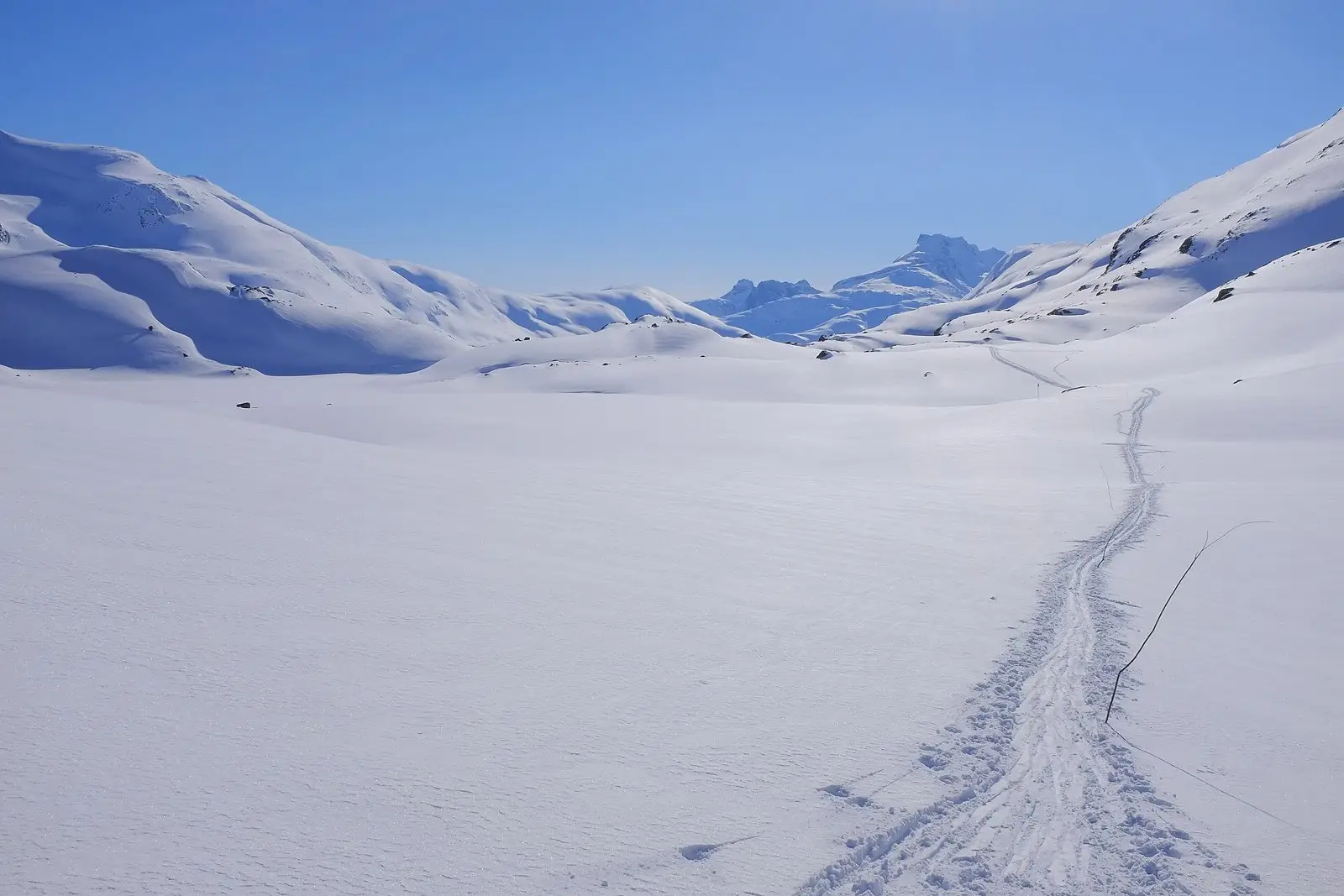
A splint made from a trekking pole and a spare jacket is the emblem of wilderness medicine, and Anne Newland counts the Wilderness Medicine Society among the professional groups she belongs to. The field covers the care of illness and injury where a hospital is hours or days away, and the training that prepares clinicians, guides and ordinary hikers to give it.
What makes medicine wild
The standard textbook definition is about distance and time. Buck Tilton's Wilderness First Responder manual, published by FalconGuides1, describes wilderness medicine as care given when definitive medical help is usually more than an hour away, by outdoor leaders, guides, researchers, soldiers and travelers who may be the closest thing to a doctor on hand.
Tilton names four features that separate it from city practice. Contact with the patient lasts hours or days, so wounds can become infected and needs such as warmth and hydration must be managed. The environment adds cold, heat, altitude and darkness. Equipment is limited and often improvised, and communication may be absent, which leaves rescuers to decide alone whether and how to evacuate1.
| Urban setting | Wilderness setting | |
|---|---|---|
| Time with the patient | Usually under an hour before the hospital | Hours, nights, sometimes days |
| Environment | Controlled | Cold, heat, wind, altitude, darkness |
| Equipment | Ambulance and hospital supplies | Little, often improvised |
| Transport decision | Patient is taken or refuses | Rescuers decide whether and how to evacuate |
A short history of the field
Tilton argues that before there was medicine there was wilderness medicine, since prehistoric skeletons show set and healed fractures. In the winter of 1811 and 1812 Napoleon's surgeon general, Baron Larrey, trained soldiers to treat wounded comrades in the field. The American Red Cross began first aid classes in 1905, but outdoor travelers came to see those courses as too short for long trips1.
The modern field took shape after that. A 1942 Sierra Club ski mountaineering manual included a chapter on remote evacuation, mountaineering first aid programs appeared in the 1950s, and 1967 brought the first edition of Medicine for Mountaineering. Wilderness courses for emergency medical technicians followed in the late 1970s, a physician society for the field formed in 1983, and the first Wilderness First Responder course was taught to Outward Bound instructors in Florida in January 19851.
- 1811Baron Larrey trains Napoleon's soldiers to treat wounded comrades in the field
- 1905The American Red Cross begins teaching first aid classes
- 1942A Sierra Club ski mountaineering manual covers remote evacuation
- 1967Medicine for Mountaineering appears in its first edition
- 1977NOLS and SOLO begin wilderness first aid and advanced courses
- 1983A physician society forms and Auerbach and Geehr publish their reference
- 1985The first Wilderness First Responder course is taught in Florida
Books that travel in a pack
Much of the field's knowledge first traveled in print. In 1983 Paul Auerbach and Edward Geehr published Management of Wilderness and Environmental Emergencies, a large reference later retitled Wilderness Medicine1. A 1986 New York Times outdoors column2 welcomed Auerbach's next book, Medicine for the Outdoors, a paperback weighing a little over a pound that a hiker could carry with a first aid kit.
The columnist, who once watched a companion lie feverish for three days in a tundra tent on James Bay with no way to get out, singled out Auerbach's advice on medical decisions. The rule was to act conservatively and decide deliberately whether to carry a patient out or stay and signal for help2.
“The art of outdoor medicine absolutely depends upon observation, anticipation and resourcefulness”Paul Auerbach, Medicine for the Outdoors, quoted in The New York Times, 1986, The New York Times
Training from first aid to first responder
Training comes in levels. A Backpacker writer's account of her first course3 describes the two day Wilderness First Aid class from NOLS as mostly about patient assessment, talking to patients and calling for help, with acronyms such as ABCDE and SAMPLE. It also covers dehydration, shock, heat exhaustion, hypothermia and simple dislocations, and requires no prior experience.
The next level is the Wilderness First Responder certification, which Backpacker's first aid kit guide4 describes as a 70 to 80 hour course and the gold standard for outdoor guides, educators and search and rescue volunteers. Tilton's manual lists what it must teach: cleaning and closing wounds, reducing dislocations and angled fractures, assessing the spine, managing severe allergic reactions and deciding when to stop CPR1.
What goes in the kit
A kit is useless without the training to use it, but help may be slow to arrive. The physicians quoted by Backpacker reject the idea that a satellite communicator replaces first aid supplies. Blisters are the most common hiking injury, followed by ankle sprains, but allergic reactions and serious trauma do occur4.
Emergency medical services usually reach a frontcountry patient in 15 to 20 minutes, one search and rescue physician explains, while backcountry teams reliably take 30 to 60 minutes just to launch toward the trailhead. The recommended kit for short trips includes bandages, gauze and tape, a tourniquet, an epinephrine injector for those who carry one, a malleable splint, an elastic bandage and common pain relievers4.
Practicing under pressure
Some training borrows from sport. Backpacker's 2010 report on the Medical Wilderness Adventure Race5 explains that two emergency physicians at the Medical College of Georgia, Michael Caudell and David Ledrick, started the event in 2000 to mimic the stress of a backcountry rescue. Teams of three cover up to 10 miles of off trail travel over as long as 10 hours, solving first aid scenarios along the way, and lapses in assessment cost time penalties.
The Utah race that year, in the Uinta Mountains, staged seven scenarios built around hypothermia, frostbite and mountain emergencies. A NOLS team won, and its curriculum director said having skills and fitness measured made everyone better practitioners and teachers5.
When the wilderness comes to the city
Disasters turn cities into wilderness. When Haiti was struck by an earthquake in January 2010, Outside magazine reported6, Paul Auerbach came with a Stanford emergency team and worked from triage tents in a compound where nearly 100 emergency patients arrived on a single day in late January. The same skills served Everest Base Camp, then holding over 1,000 people at 17,600 feet, when a 2015 avalanche killed 15 and destroyed the camp's medical tent; doctors who were there later described7 passing patients through triage stops at Pheriche and Lukla and labeling each with tape listing name, age and injuries7.
Sport keeps adding problems. At a Boulder meeting on extreme sports medicine in 2018, an orthopedic surgeon recalled learning to pull a tooth over a satellite phone at Everest Base Camp8.
Why the backcountry teaches judgment
The sources agree that the hardest part of wilderness care is deciding. Tilton writes that the variety of situations defies a cookbook approach, and that every patient raises the same questions: can they stay or must they go, and should it be fast or slow1. Auerbach's conservative rule makes the same demand, weighing a delayed trip against a dangerous carry2.
The Everest doctors drew their own lesson: a region needs a disaster plan and trained staff before the next event, because improvisation, however good, does not replace preparation7. The Backpacker writer left her course able to judge when evacuation was needed, which may be the skill the backcountry teaches best3. Entries on reading for pleasure, home cooking and cycling and health complete the outdoors and home section.
References
- Wilderness First Responder. REI.
- OUTDOORS; A Handbook For Emergencies (Published 1986). The New York Times, 1986.
- Taking Wilderness First Aid Wasn't What I Expected. Here's Why I'm Still Glad I Did.. Backpacker, 2026.
- What ER Doctors and Wilderness Specialists Say You Should Pack in Your First Aid Kit. Backpacker, 2026.
- Fast Responders:The Medical Wilderness Adventure Race. Backpacker, 2010.
- Triage, Vodka, and Wilderness Medicine in Haiti. Outside, 2010.
- What We Can Learn From an Avalanche at Everest Base Camp. Outside, 2018.
- All the Ways We Wreck Our Bodies in Pursuit of Adventure. Outside, 2018.
Further reading online
- REIWilderness First Responder
- The New York TimesOUTDOORS; A Handbook For Emergencies (Published 1986)
- BackpackerTaking Wilderness First Aid Wasn't What I Expected. Here's Why I'm Still Glad I Did.
- OutsideTriage, Vodka, and Wilderness Medicine in Haiti


