Anne Newland, a physician who draws comics and has said she wants to write and speak about the health humanities, comes from a field that a number of medical schools now bring into the classroom. Imagine a student's four panel comic about a first patient: the student hovering at the door, the patient small in a hospital bed, a speech bubble crowded with jargon, and a final panel in which the two simply look at each other. Exercises like that one are the point of comics teaching. When a Chicago medical student named Alexandra Jones drew a bedside scene for a class, she told BBC News in 20131 that it helped her see the consultation from the patient's side.
Why medical schools teach with comics
In March 2010 two Penn State humanities teachers, the physician Michael Green and Kimberly Myers, made the case in an analysis for The BMJ2. They held that graphic stories have a role in patient care and in medical education, and that the main reason the practice had not spread was that most doctors had never considered it. Illness memoirs in comic form, they wrote, can show doctors worries and misconceptions that patients rarely voice during an appointment.
Eight years later the AMA Journal of Ethics devoted an issue to graphic medicine. One article in it, from a team at the University of Zaragoza in Spain3, opens by noting that comics are now used increasingly in medical schools so that students can reflect on their own experience, build empathy for patients and sharpen their communication. That article cites the 2010 BMJ piece as its starting point, a sign of how quickly a single paper became a reference for the field.
The first comics courses
Penn State's Comics and Medicine class was among the earliest. Taught by Green and Daniel George, it had enrolled 66 fourth year students between 2009 and late 2015, according to NPR's account of their study in JAMA4. The class asked students to put their feelings about training into comics of their own.
In Chicago the nurse and cartoonist MK Czerwiec took a similar path. After the AIDS unit where she worked at Advocate Illinois Masonic Medical Center closed in 2000, she drew a small picture of herself, wrote that she was sad and boxed it in, then kept going panel by panel, as a 2011 report in The New York Times5 describes. She later earned a master's degree in medical humanities and bioethics at Northwestern and began teaching two seminars called Drawing Medicine to its medical students. In London, Giskin Day runs workshops on the arts for trainee doctors at Imperial College, and she argues that graphic novels suit a profession short of time because they are quick to read and strong in effect1.
| Who teaches | What students do | |
|---|---|---|
| Penn State College of Medicine | Michael Green and Daniel George | Fourth year students draw their own training |
| Northwestern, Feinberg School of Medicine | MK Czerwiec | Drawing Medicine seminars on patient encounters |
| Imperial College London | Giskin Day | Arts workshops; students draw consultations |
| University of Zaragoza | An ethics teaching team | Custom comics teach confidentiality to preclinical students |
Drawing the patient's side of the bed
Empathy is the usual goal. For the 2013 BBC article, Czerwiec drew a strip in which a doctor's brisk, breezy manner leaves a woman with cancer feeling like one more lab result, until a colleague hands him a graphic novel by a cancer patient and he begins to see the person first1. The idea behind such exercises, the reporters explained, is that drawing a scene with speech bubbles makes future doctors think about what they say and about their body language.
At a 2011 Comics and Medicine conference at Northwestern, Catherine Belling, who taught medical humanities and bioethics there, argued that the pairing of words and pictures can strengthen a doctor's ability to show empathy5. Linda Raphael of the George Washington University School of Medicine went further, suggesting that graphic novels can get past the defenses doctors build up against their patients' troubles. Czerwiec herself puts the case in plain terms.
“Illness doesn't just happen to a body.”MK Czerwiec, speaking to BBC News, BBC
What student comics reveal about training
Comics also show teachers what students are going through. Of the 66 students in the Penn State class, nearly half drew their supervisors as monsters, George and Green reported in a 2015 JAMA article4. Wards became dungeons, attending physicians became cursing fiends, and the students drew themselves as sleepless zombies crossing ruined landscapes.
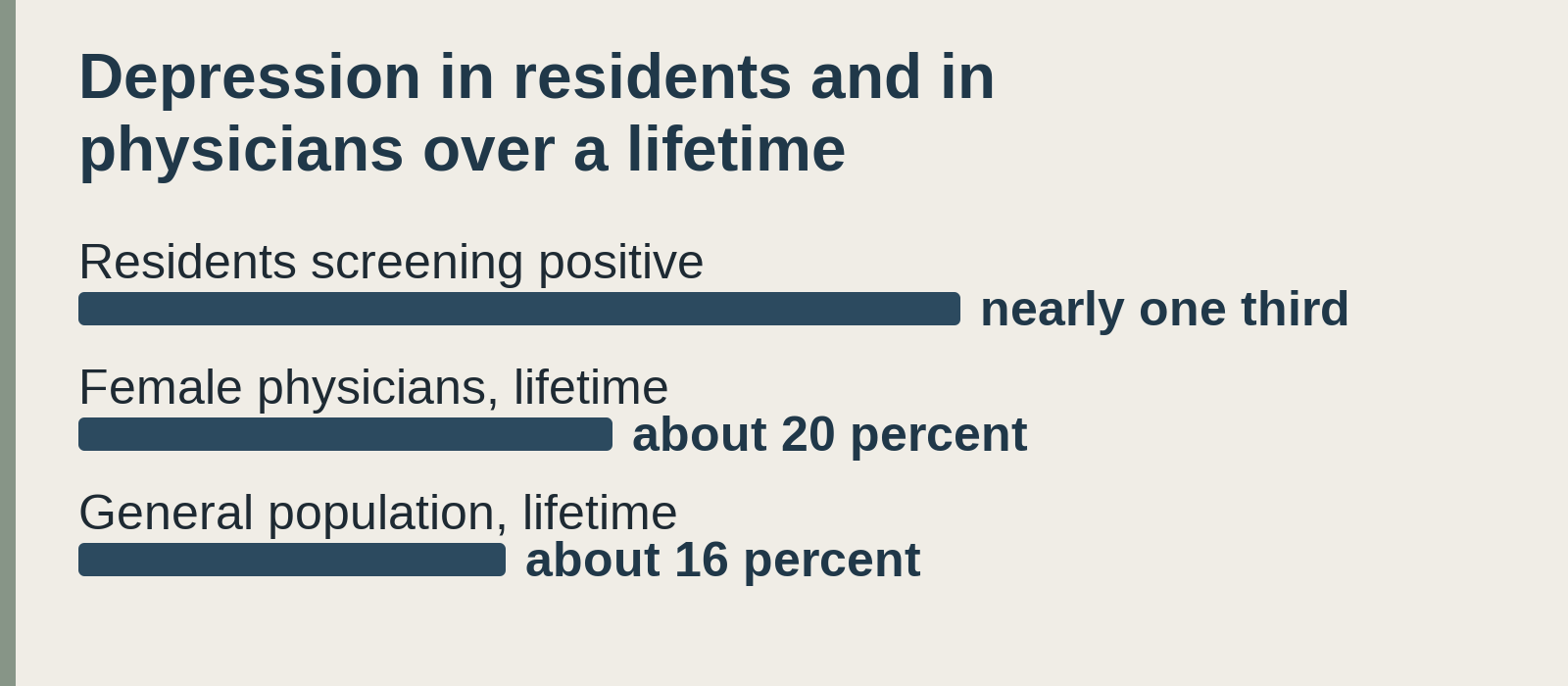
The same issue of JAMA carried a much larger review, which found that nearly one third of more than 17,000 residents in 31 studies screened positive for depression or depressive symptoms. In an editorial, Thomas Schwenk set those figures beside lifetime depression rates for physicians that roughly match the general population. Green told NPR that harsh teaching passes down the generations, because people tend to treat others the way they were treated, and he called for clear consequences when supervisors abuse trainees.
Can comics teach medical ethics
The Zaragoza team tested the question directly. They wrote comics about confidentiality for medical students, used them in a required course for preclinical students and compared the results with lectures and class discussion3. Students found the comics more appealing, took part more and grew more aware of their own learning, while their marks stayed the same as under the older methods. The authors believed no one had used custom comics to teach a specific topic in health care ethics before, and they reported their findings as a two page comic.
How drawing trains observation
Drawing also slows the eye down. Day tells students that when they sketch a few panels of a consultation they start to notice the doctor's posture, the patient's body language and the layout of the room1. Ian Williams, the British physician and cartoonist, told the BBC that in medical school he drew slices of the brain and the circulation of the heart to fix them in memory. Brian Fies, whose Mom's Cancer began as a web comic, said a single sketch of his mother in a chemotherapy chair captured that day better than a thousand words could.
The habit has roots outside comics too. A 2001 lesson plan from The New York Times Learning Network6 treats diagnosis as detective work: students research a disease, write a patient's account of the symptoms with real clues and misleading ones, and then trade accounts with a partner who must work out the illness. The exercise rewards the same attention a comic demands, to what a patient says, what they leave out and what can be seen.
Patient memoirs in comic form carry that lesson onto the page, a thread continued in comics and health education and in books of graphic medicine, while the wider arguments for literature and art in training appear under the medical humanities. A student who has drawn a patient has had to look long enough to see the hands, the face and the room. That is the lesson drawing offers medicine: looking closely is a clinical skill, and a pen makes it impossible to skip. Related entries are collected under comics, music and medicine.
References
- What's up, Doc? How comic strips are improving bedside manner. BBC, 2013.
- Graphic medicine: use of comics in medical education and patient care | The BMJ. The BMJ.
- Teaching Confidentiality through Comics at One Spanish Medical School , Feb 2018 | Journal of Ethics | American Medical Association. American Medical Association.
- Medical Students See Their Mentors As Marauding Monsters. NPR, 2015.
- A New Therapeutic Tool in the Doctor’s Bag: Comic Strips (Published 2011). The New York Times, 2011.
- Doctors as Detectives. The New York Times, 9874.
Further reading online
- BBCWhat's up, Doc? How comic strips are improving bedside manner
- The BMJGraphic medicine: use of comics in medical education and patient care | The BMJ
- American Medical AssociationTeaching Confidentiality through Comics at One Spanish Medical School , Feb 2018 | Journal of Ethics | American Medical Association
- NPRMedical Students See Their Mentors As Marauding Monsters
- The New York TimesA New Therapeutic Tool in the Doctor’s Bag: Comic Strips (Published 2011)
Related entries
Books of Graphic Medicine
A reader's guide to the memoirs, anthologies and manifesto at the center of graphic medicine.

Music and Medicine
Bedside cellos, drumming circles for Parkinson's disease and orchestras of doctors: what music does in medicine.
The Medical Humanities
Novels, paintings, plays and comics in the medical curriculum, and the case for keeping them there.


