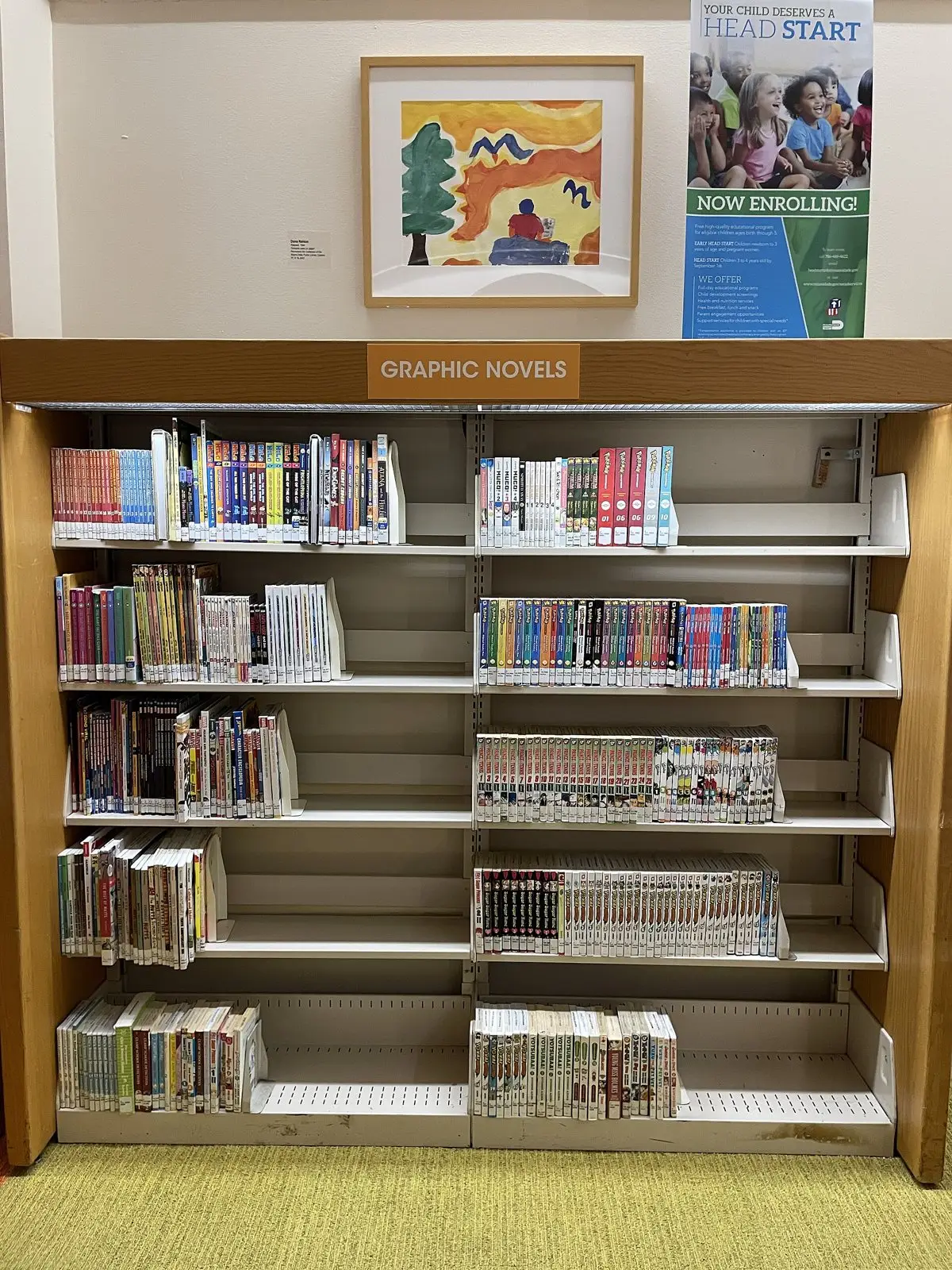
Anne Newland, a physician who makes her own comics, belongs to the Graphic Medicine International Collective, a group that each year honors outstanding comics about health. Most of what it honors sits on a shelf. Run a finger along the spines of a graphic medicine collection and the titles tell the story of the field: a 1972 underground comic about obsessive compulsive disorder, a cancer memoir by a professional cartoonist, a nurse's history of an AIDS ward, a doctor's novel set in a small Welsh town, an anthology about menopause. Each is a book in the ordinary sense, bound, sold and reviewed like any other.
The memoirs that built the field
Patient memoirs came first and still dominate. A 2019 roundup in The New York Times Book Review1 calls them the leading strand of graphic medicine and points back to Justin Green's 1972 comic Binky Brown Meets the Holy Virgin Mary, the first autobiographical work in American comics. The same review covers Lucy Knisley's Kid Gloves, which follows two miscarriages, a pregnancy and a delivery in which Knisley had a seizure, lost a dangerous amount of blood and spent a week in intensive care. Pregnancy is not an illness, the reviewer notes, yet it made Knisley a medical patient again and again. Knisley, then 34, had been publishing autobiographical comics since her early twenties, and the reviewer judged this her most searching subject. Earlier, a 2015 Times review2 cited Marisa Acocella Marchetto's Cancer Vixen as a classic of the form by a professional artist, alongside amateurs who used comics to make sense of being sick.
Caregivers and nurses widened the shelf. In JAMA's review of the best graphic medicine of 20173, Michael Green and Susan Squier singled out two books about death and dying: Marissa Moss's Last Things, told by a family caregiver, and MK Czerwiec's Taking Turns, told by a nurse on an HIV and AIDS unit. They praised both for refusing the consoling silver lining that so many illness memoirs reach for.
“bracing alternatives to conventional narratives”Michael J. Green and Susan M. Squier, JAMA, JAMA Network
Clinicians on the page
Doctors arrived later as authors. The Times review of Ian Williams's The Bad Doctor called it among the first attempts by a health professional to portray the medical world in comic form2. Its general practitioner, Dr. Iwan James, works in a small Welsh town with a ten minute egg timer on his desk, the length of a routine appointment, and escapes by cycling the hills. The reviewer found that what could have been a weak memoir became an affecting story, and judged the medium suited to territory where what goes unspoken demands as much attention as what is said. The reviewer also singled out small visual details, such as a menacing patient's huge dark sunglasses in which the doctor sees only his own inadequacy, that prose would struggle to carry.
Williams followed it with The Lady Doctor, published by Penn State University Press, and the 2019 Book Review gave it a careful reading1. Its heroine, Lois Pritchard, is a 40 year old general practitioner who also works part time in a genitourinary medicine clinic. The reviewer found the plot ordinary but the portrait of practice absorbing, especially recurring wordless pages in which faces and bodies stream past in the rhythm of a working day, and a doctor who meets the unpleasant parts of the job calmly and without judgment.
- 1972Justin Green publishes Binky Brown Meets the Holy Virgin Mary
- 2015The Graphic Medicine Manifesto appears, part prose and part comics
- 2017Last Things and Taking Turns stand out on JAMA's year end list
- 2018Jenell Johnson edits the anthology Graphic Reproduction
- 2019Ian Williams publishes The Lady Doctor; Lucy Knisley publishes Kid Gloves
- 2020Menopause: A Comic Treatment and PathoGraphics join the Penn State series
- 2021Menopause wins Eisner Awards for best anthology and best short story
- 2022The collective launches an annual award for health comics
Anthologies and the Penn State series
A manifesto gave the field its charter. The group behind graphicmedicine.org, which also runs an annual international conference and oversees a book series, issued the Graphic Medicine Manifesto in 2015 as a hybrid of prose and comics, according to the 2019 Book Review1. The Penn State University Press series has since gathered anthologies that put many artists between two covers. Graphic Reproduction4, edited by Jenell Johnson and published in 2018, collects eleven comics on conception, pregnancy, loss and birth, with work by Carol Tyler, Alison Bechdel and Joyce Farmer, an afterword by Susan Merrill Squier and classroom exercises at the back. In her introduction Johnson writes that after years of fertility treatment, drawing comics gave her a way to picture her own body, and her doctors, on her own terms.
Menopause: A Comic Treatment5, edited by Czerwiec in 2020, brings together comics by artists including Lynda Barry, Ellen Forney and Dana Walrath on a subject the press describes as long treated as taboo and played for cheap jokes. It won the 2021 Will Eisner Comic Industry Awards for best anthology and best short story and was named a New York Times best graphic novel of 2020. The scholarly side of the series includes PathoGraphics6, edited by Squier and a professor of German literature at the Freie Universität Berlin, who both took part in a 2016 to 2021 research project of the same name; its thirteen chapters compare illness narratives in fiction, memoir, cartoons and comics.
| Editor | What it gathers | |
|---|---|---|
| Graphic Reproduction (2018) | Jenell Johnson | Eleven comics on conception, pregnancy, loss and birth, with classroom exercises |
| Menopause: A Comic Treatment (2020) | MK Czerwiec | Comics by artists including Lynda Barry, Ellen Forney and Dana Walrath |
| PathoGraphics (2020) | Susan Merrill Squier and a Berlin coeditor | Thirteen chapters of essays on illness in prose and comics |
Why the field publishes in book form
Graphic medicine has kept its center of gravity in books for practical reasons visible in its own institutions. JAMA's year end reviews, written by Green, usually with a coauthor, have mostly chosen standout books; the 2020 edition broke the pattern only because the flood of web comics about COVID 19 was too large to ignore, and its authors said so8. Even then they sorted the year's work into three groups: instructional comics, personal stories and comics made as therapy. When the collective, founded in 2019, launched its annual award in 2022, it split entries into long form works of more than 25 pages and short form works of 25 pages or fewer, as Green and Kevin Wolf explained in a 2023 JAMA report7.
Length matters to these stories. A memoir of a pregnancy, a nursing career or a parent's decline needs room for time to pass, and a book holds a reader inside that time in a way a single strip cannot. Books can also be taught: anthologies such as Graphic Reproduction arrive with discussion questions, which suits the classrooms described under comics in medical education. The field's origins are traced in graphic medicine, and its neighbors in the medical humanities and music and medicine, all gathered under comics, music and medicine.
References
- Graphic Novels That Will Diagnose Your Disease (Published 2019). The New York Times, 2019.
- Review: ‘The Bad Doctor’ and ‘Graphic Medicine Manifesto’ (Published 2015). The New York Times, 2015.
- Graphic Medicine: The Best of 2017. JAMA Network.
- Graphic Reproduction: A Comics Anthology Edited by Jenell Johnson and Afterword by Susan Merrill Squier. Penn State University Press.
- Menopause: A Comic Treatment Edited by MK Czerwiec. Penn State University Press.
- PathoGraphics: Narrative, Aesthetics, Contention, Community Edited by Susan Merrill Squier and Irmela Marei Krüger Fürhoff. Penn State University Press.
- Best of Graphic Medicine,The 2023 Graphic Medicine International Collective Awards | Humanities | JAMA | JAMA Network. JAMA Network, 2023.
- Graphic Medicine,The Best of 2020 | Humanities | JAMA | JAMA Network. JAMA Network, 2020.
Further reading online
- The New York TimesGraphic Novels That Will Diagnose Your Disease (Published 2019)
- JAMA NetworkGraphic Medicine: The Best of 2017
- Penn State University PressGraphic Reproduction: A Comics Anthology Edited by Jenell Johnson and Afterword by Susan Merrill Squier
Related entries
The Medical Humanities
Novels, paintings, plays and comics in the medical curriculum, and the case for keeping them there.
Graphic Medicine
Comics about illness, caregiving and clinical work, and the artists, nurses and doctors who turned them into a field.
Comics in Medical Education
Why some medical schools hand students pens and paper, and what the resulting comics reveal about training.


