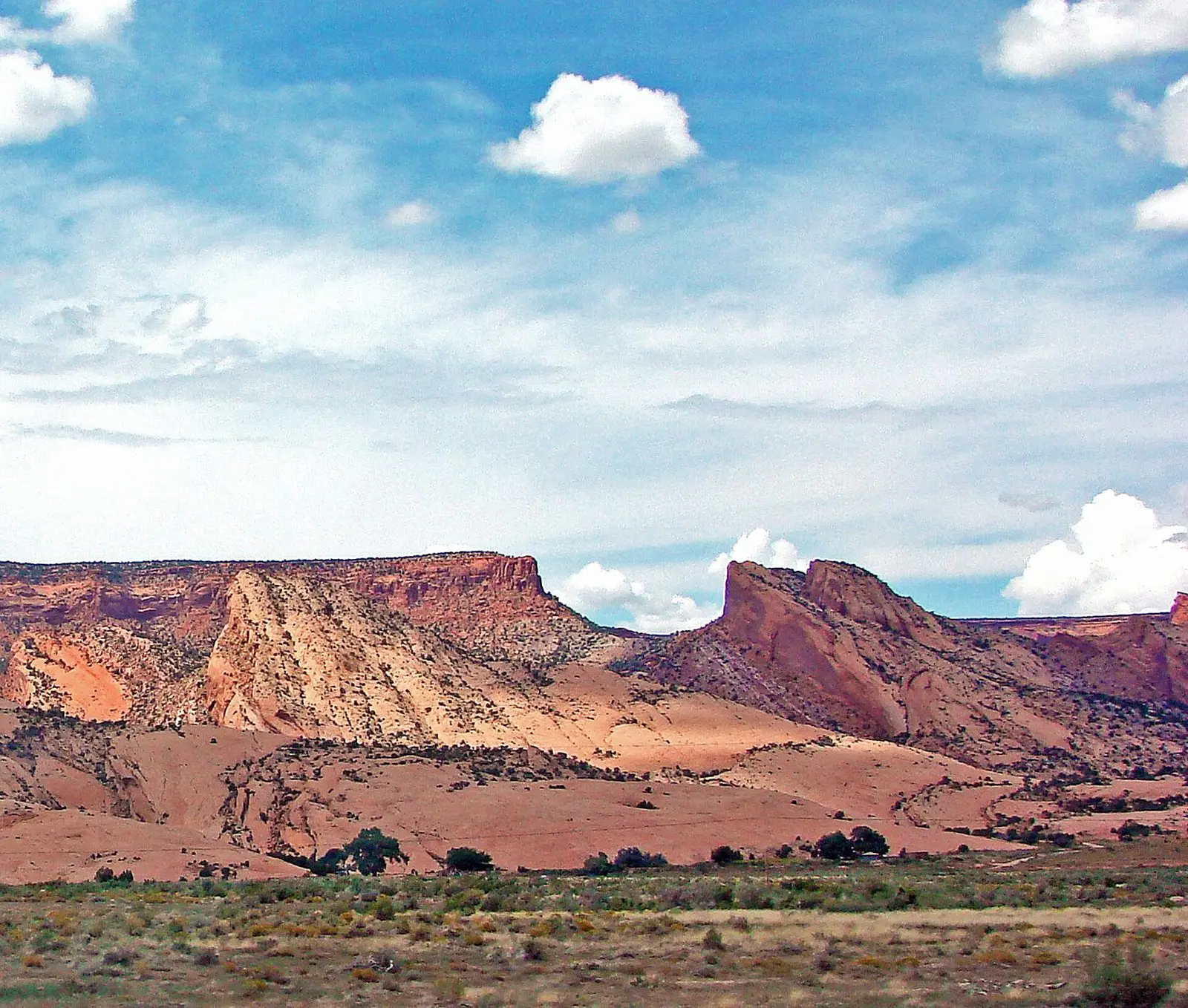
Anne Newland regards her years on the Navajo Nation, where she was an Indian Health Service physician at Kayenta Health Center from 2004 to 2012, as a defining period in her working life. This entry is about how care there is arranged: who runs the hospitals and clinics, how patients reach them and what happened to that arrangement when a pandemic arrived.
In August 1964 a couple from Teecnospos, Arizona, raced toward Sage Memorial Hospital in Ganado, some 130 miles away, because their baby was coming. Their son was born in the car just as they passed a roadside marker reading six miles to the hospital, a story retold in a Navajo Times look back at 19641. The retrospective notes that the original story never explained why the family drove so far when closer hospitals existed. Whatever the reason, the trip is a fair picture of care on the Nation, where the hospital a family chooses can lie a full morning's drive from home.
The Nation is large. Its own figures put tribal lands at about 27,000 square miles across Arizona, Utah and New Mexico, as Cronkite News reported in 20242, and in 2021 about 170,000 people lived on the reservation, according to a KJZZ report on the tribe's pandemic response3. The federal promise behind their care goes back to the treaty of 1868, which committed the United States to provide free health care to every member of the tribe1.
Who runs the hospitals and clinics
Many Navajo people get their care through the Indian Health Service, which runs hospitals and health centers across the region3. Its hospitals include the Northern Navajo Medical Center and the Gallup Indian Medical Center, both named by doctors who spoke at a December 2020 town hall3. Nearly a century passed after the treaty before a Navajo doctor worked in that system. The first to join it, the surgeon Taylor McKenzie, also the first Navajo to graduate from medical school, was hired in November 1964 and went on to work at the hospital in Shiprock for more than 30 years1. Why such doctors remain rare is the subject of Native American physicians.
Other care is run by organizations rooted on the Nation itself. Sage Memorial Hospital in Ganado is a Native managed health system with its own behavioral health unit, as KJZZ reported in 20244. Until late 2024 its inpatient beds, emergency and trauma wing and imaging sat in a building from the 1960s with old piping, generators and heating. A Cronkite News photo essay from May 20245 showed a trauma room shared by several patients and separated only by curtains, and the hospital's leaders said the old building limited how many patients they could see. The replacement, a $177 million campus more than twice the size of the old one, added an expanded intensive care unit, a labor and delivery unit and new imaging machines5.
What replacing such a building involves is covered in health facilities in Indian Country. Running a tribal hospital means working across several governments at once. Sage Memorial's policy advisor told Cronkite News in 20266 that every policy question involves federal, state and tribal systems. The hospital's new dialysis center shows what that means in practice: when the state transportation department required two traffic lights on the highway by the campus, money set aside for dialysis went to the lights, and the only contractor who bid charged a little over $7 million. State lawmakers later granted $3 million to finish the center6.
“We have to navigate three different systems: federal, state and tribal”Kim Russell, policy advisor for Sage Memorial Hospital, Cronkite News
Keeping clinicians is the other constant. A Navajo psychiatrist at Sage Memorial told reporters that patients often lose their doctor, counselor or psychiatrist after six months to a year4. The hospital's chief medical officer said recruiting depends on showing candidates how varied the work can be, and on admitting that rural practice does not suit everyone4. Housing is a large part of the problem. The facilities director called it the biggest hurdle for health care on the Nation, since even qualified Navajo nurses and doctors who want to come home struggle to find a place to live, and the hospital has planned a 31 unit apartment building and a community of tiny homes6.
Prevention programs run alongside the clinics. A 2020 study by the Centers for Disease Control and Prevention estimated that about 100,000 Navajo adults, roughly half the adult population, were living with type 2 diabetes or prediabetes, and Sage Memorial began a produce prescription program in August 2023 to put more fruit and vegetables on patients' tables2.
Distance shapes every kind of care
The pandemic showed how thin the margins were. When the first case on the Nation was confirmed in March 2020, the patient was a man from Chilchinbeto who had first reported his symptoms at a local health center; state officials ran the test, and tribal and county health workers set out to find everyone he had been near, according to the Navajo Times7. The authority behind that response is explained in tribal public health.
- 1Report The patient described his symptoms to a health center near his home
- 2Test The state health department ran the test and confirmed the result
- 3Notify The Navajo Department of Health informed the tribe's president
- 4Isolate Health and emergency officials screened and isolated his family
- 5Trace County public health staff contacted and monitored anyone exposed
Within weeks the shortages were plain. In April 2020 the Nation had about 400 hospital beds for 170,000 people, so many patients were flown to hospitals in border towns, as KJZZ reported8. About 40 percent of residents had no running water and about one in ten had no electricity, which made frequent hand washing and storing food hard8. By December 2020 doctors described full hospital beds and hospitals competing for oxygen, and over the first year one in every 140 residents died of the virus3. A public health researcher at the University of Arizona noted that the federal government budgets less than half the national average of about $11,000 per person for Indian Health Service patients3.
The same network that struggled with beds proved fast at vaccination. Three months into the vaccine effort, about 30 percent of enrolled tribal members had received at least one dose, against 20 percent of Arizonans, and the researcher credited, in part, the agency's direct federal ties and wide network of clinics3.
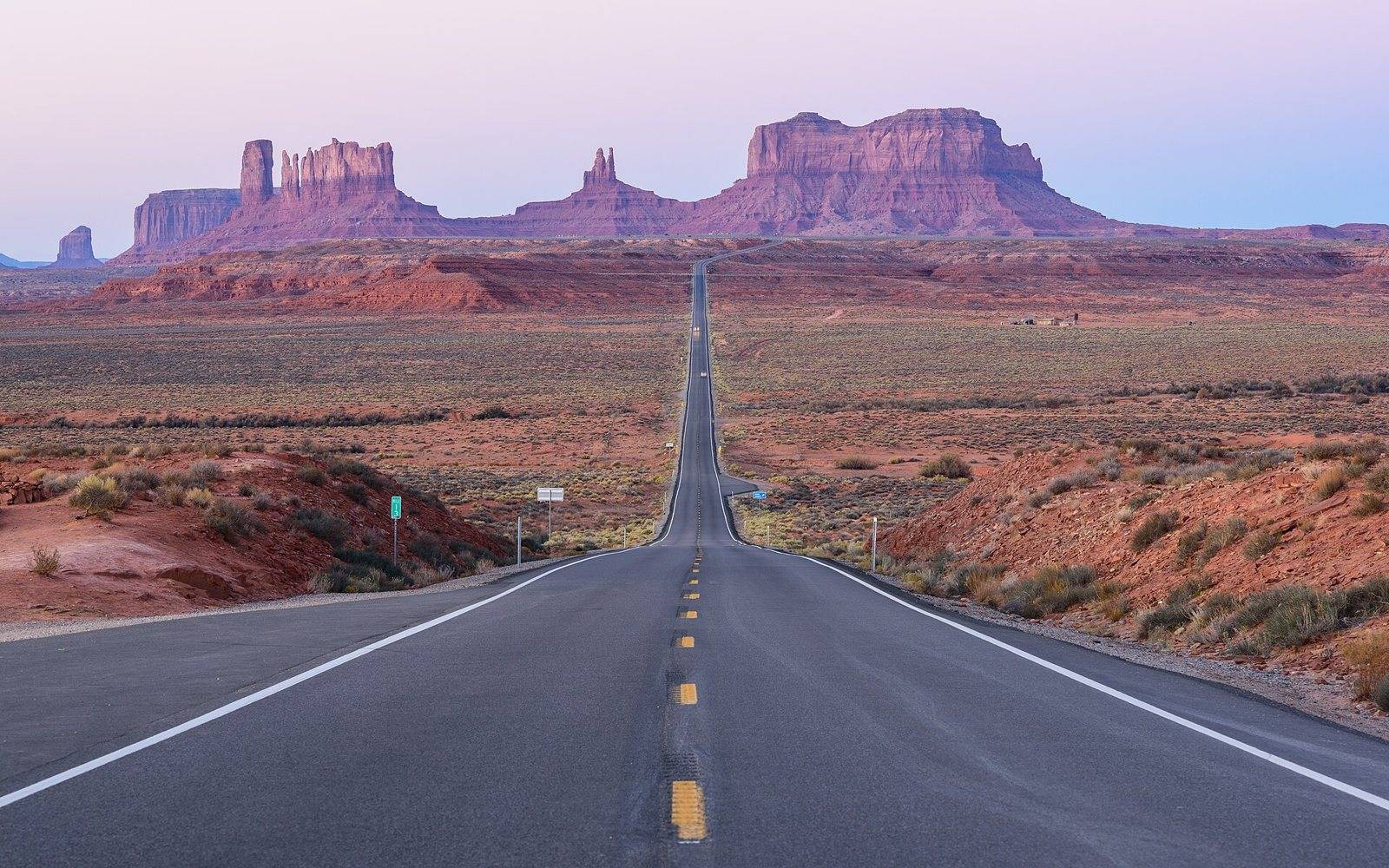
Distance runs through all of it. The 1964 family drove 130 miles to reach the hospital they trusted1. In 2026 a patient who lived only 4 miles from Sage Memorial still spent about 30 minutes on a dirt road to get there, and people needing dialysis could travel up to 50 miles each way before sitting through a treatment of four to six hours6. On the Nation, the length of the road decides how often a patient can be seen, how quickly an emergency reaches a bed and whether a clinician can find a home close enough to stay.
- 1868A treaty commits the United States to free health care for the tribe
- 1964The first Navajo physician joins the Indian Health Service
- March 2020The first case of the coronavirus on the Nation is confirmed
- April 2020About 400 hospital beds serve some 170,000 residents
- March 2021About 30 percent of enrolled members have a first vaccine dose
- August 2023Sage Memorial starts a produce prescription program
- December 2024The new Sage Memorial campus opens and the old hospital closes
References
- 50 Years Ago: First Diné doctor hired Navajo Times. Navajo Times, 2014.
- Navajo psychiatrist bridges gaps between culture and care at Sage Memorial Hospital. Cronkite News, 2024.
- The Navajo Nation Took A Hard Stance Against COVID 19 , And The Experts Say It Worked. KJZZ, 2021.
- Navajo psychiatrist: By incorporating traditional practices, 'you get a fuller healing'. KJZZ, 2024.
- Sage Memorial Hospital will expand health care access in Navajo Nation. Cronkite News, 2024.
- Medical center on Navajo Nation make renovations despite infrastructure challenges. Cronkite News, 2026.
- First Diné tests positive for coronavirus Navajo Times. Navajo Times, 2020.
- Lacking Electricity, Navajo COVID 19 Cases Surge. KJZZ, 2020.
Further reading online
- Navajo Times50 Years Ago: First Diné doctor hired Navajo Times
- Cronkite NewsNavajo psychiatrist bridges gaps between culture and care at Sage Memorial Hospital
- KJZZThe Navajo Nation Took A Hard Stance Against COVID 19 , And The Experts Say It Worked
Related entries
Tribal Public Health
Tribes hold the legal power to protect their citizens' health, and the pandemic showed how they use it.
Health Gaps for American Indian People
Federal data on where Native health trails the national figures, where it does not, and why.
Native American Physicians
A medical school on Cherokee land, pathway programs and the pioneers who built them.

