
Anne Newland is based in Flagstaff, Arizona, a mountain city whose streets give way on nearly every side to the ponderosa pines of the Coconino National Forest. Away from work she rides a bicycle, cooks and reads.
Beside the horse racetrack at Fort Tuthill County Park stands a ponderosa with golden bark that, by Wally Covington's tree ring count, took root in 1641, according to an Arizona Highways essay on the old pines around Flagstaff1. Around it the stand is open, with grass between the trunks, because foresters have spent years cutting out the crowded young trees that once hemmed it in. That open look, and the long argument over how to get it back, is the story of this forest.
A forest from red rock to alpine tundra
The Coconino covers about 1.8 million acres, running from the sandstone buttes around Sedona through pine and pinyon juniper country to the tundra near the summit of the San Francisco Peaks, by the count of the National Forest Foundation's guide to the forest2. Humphreys Peak, at 12,633 feet, is the highest point in Arizona. To the south the Mogollon Rim drops as much as 2,000 feet and marks the southern edge of the Colorado Plateau. The same guide puts annual visits at about 4.4 million.
People lived here long before any federal map did. The foundation's guide names the Sinagua, who occupied central and northern Arizona from about A.D. 600 to 1450 and left cliff dwellings and rock art, some of which is now protected in the national monuments near the city2. The federal story starts in 1898 with the San Francisco Mountains Forest Reserve, which was folded into the new Coconino National Forest in 1908.
How a ponderosa pine grows
Ponderosa pine grows in 16 western states, from British Columbia to the mountains of northern Mexico, and Arizona holds the largest unbroken belt of it, some 2.6 million acres reaching from New Mexico to the South Rim of the Grand Canyon1. The trees get most of their water from winter snow and the summer monsoon. In the Coconino they grow mainly between 6,500 and 8,000 feet2.
Young ponderosas have nearly black bark. After 180 to 200 years the trunk turns reddish brown or gold, which earned old trees the nickname yellow belly, and the bark starts producing terpenes that smell to many hikers of vanilla or butterscotch1. The Abert's squirrel nests in the trees and eats their seeds and twigs, and in moving seed around it helps the forest regenerate. Dead trees still work: more than 100 bird species nest in standing ponderosa snags.
Wildlife of the Coconino
Because the forest spans desert scrub to tundra, it holds more than 500 vertebrate species, including at least 300 kinds of birds and almost 100 mammals, according to the Forest Service's own page on Coconino animals3. Nine of Arizona's ten big game species live here; bison is the one missing. The forest has habitat for 24 of the state's 28 bat species and more than 200 protected nesting and roosting areas for the Mexican spotted owl. The largest gathering of bald eagles ever counted in Arizona, 120 birds, was recorded near Mormon Lake.
The Forest Service counts 60 special status species, and most of them depend on streams and wetlands. Fossil Creek is singled out as the only stream in Arizona with a large community of native fish and no introduced fish at all3. On dry ground the variety sits close to the soil: a Forest Service assessment of the pine forest around Flagstaff4 counts more than 600 understory plant species against roughly 10 to 15 kinds of trees.
Fort Valley, the first experimental forest
About ten miles north of Flagstaff is Fort Valley, described by a 2019 KNAU report on the station5 as the oldest experimental forest in the country. Gus Pearson arrived in the hard winter of 1908 with two mules, Pat and Mike, and lived in a small uninsulated cabin. Lumbermen had noticed that no seedlings were coming up where the forest had been clear cut, and the Forest Service wanted to know why. Pearson set up weather stations, fenced out cattle and planted a nursery, and a one room schoolhouse soon trained young rangers.
The station was first called the Coconino Experiment Station, and a Coconino ranger named William Wilson helped Pearson through that first winter, according to a 2008 Forest Service paper on a century of cooperation6. Some sample plots laid out in 1912 are still measured, and the authors proposed listing them on the National Register of Historic Places to keep other forest activities off them.
- 1880sSettlers bring large cattle and sheep herds and commercial logging
- 1908The Coconino National Forest is created; Gus Pearson arrives at Fort Valley
- 1912Permanent sample plots are laid out; some are still studied
- 1919A wet spring sets off a huge crop of pine seedlings
- 2000Researchers gather in Flagstaff on restoring ponderosa ecosystems
- 2004The Ecological Restoration Institute opens at NAU
- 2008Fort Valley and the Coconino both mark their centennials
Fire, grazing and the crowded forest
Before settlement, light surface fires burned through the pines every two to seven years, clearing litter and most seedlings and keeping the grass thick, by the Forest Service assessment's account4. From the 1880s, cattle and sheep ate the grass that carried those fires, railroads hauled out timber, and settlers put out fires to protect homes and ranches. Then the wet spring of 1919 produced an enormous seed crop, and with fire suppressed, those seedlings grew into dense doghair thickets of trees all the same age5.
The sources agree on the direction of the change but give different numbers. A 2015 Ecological Restoration Institute backgrounder8 estimates 20 to 60 trees per acre in the original southwestern ponderosa forest and 300 to 1,500 today. Covington's research, as Arizona Highways reports it, found about 23 per acre before settlement and more than 800 by the mid 1990s1. Crowding also costs water: the assessment says dense trees take up more soil moisture, which likely leaves less for streams and groundwater4.
| Before settlement | By the late twentieth century | |
|---|---|---|
| Trees per acre (ERI) | 20 to 60 | 300 to 1,500 |
| Trees per acre (Covington) | About 23 | More than 800 |
| Fire | Light ground fires every 2 to 7 years | Suppressed; crown fires possible |
| Forest floor | Thick native grass | Shaded, little grass |
What a century of forest study learned
Restoration, as the institute describes it, has two main tools: mechanically thinning out excess small trees and bringing back low intensity fire through prescribed burns8. Every tree that dates from before European settlement is left standing, and each prescription is fitted to the site's past conditions, its endangered species and its roads and trails. The backgrounder points to the Wallow Fire of 2011, where fire in treated stands dropped out of the crowns to the ground.
Much of this was worked out in Flagstaff. A conference held there in April 2000 produced a 188 page volume on restoring ponderosa pine ecosystems7, with papers ranging from soil fungi after thinning to the cost of treatments near homes and the lumber that can be milled from small Flagstaff pines. The Ecological Restoration Institute opened at NAU in 2004 with Covington as director1.
“It is a race against crown fire”Wally Covington, in Arizona Highways, Arizona Highways
Fort Valley has come full circle. Its first job was to make pines grow; today Margaret Moore of NAU runs plots there that are thinned, thinned and burned, or left alone, to learn whether regular burning can stop another explosion of seedlings like 1919's5. Pearson's weather records now feed climate research, and his plots are still measured. The lesson of a hundred years is that this forest was built by frequent fire, and that it stays healthy only when fire, or careful thinning in its place, keeps the trees spaced apart. Covington has estimated that only about 2 percent of the West's ponderosa forests have been thinned so far1.
References
- The Grandmother of All Ponderosas | Arizona Highways. Arizona Highways.
- Coconino National Forest , National Forest Foundation. National Forest Foundation, 2026.
- Coconino National Forest Animals. U.S. Forest Service.
- Ponderosa Pine Forest at Flagstaff. Northern Arizona University.
- At Century Old Experimental Forest, History Is In The Trees. KNAU, 2019.
- A century of cooperation: The Fort Valley Experimental Forest and the Coconino National Forest in Flagstaff (P 53) | US Forest Service Research and Development. U.S. Forest Service.
- Ponderosa pine ecosystems restoration and conservation: steps toward stewardship; 2000 April 25 27; Flagstaff, AZ | US Forest Service Research and Development. U.S. Forest Service.
- Restoring Ponderosa Pine Forests of the Intermountain West. City of Flagstaff.
Further reading online
- Arizona HighwaysThe Grandmother of All Ponderosas | Arizona Highways
- National Forest FoundationCoconino National Forest , National Forest Foundation
- U.S. Forest ServiceCoconino National Forest Animals
- Northern Arizona UniversityPonderosa Pine Forest at Flagstaff
- KNAUAt Century Old Experimental Forest, History Is In The Trees
- City of FlagstaffRestoring Ponderosa Pine Forests of the Intermountain West
Related entries
Route 66 in Flagstaff
A railroad town on the Mother Road, from the Weatherford Hotel to a fiberglass lumberjack.
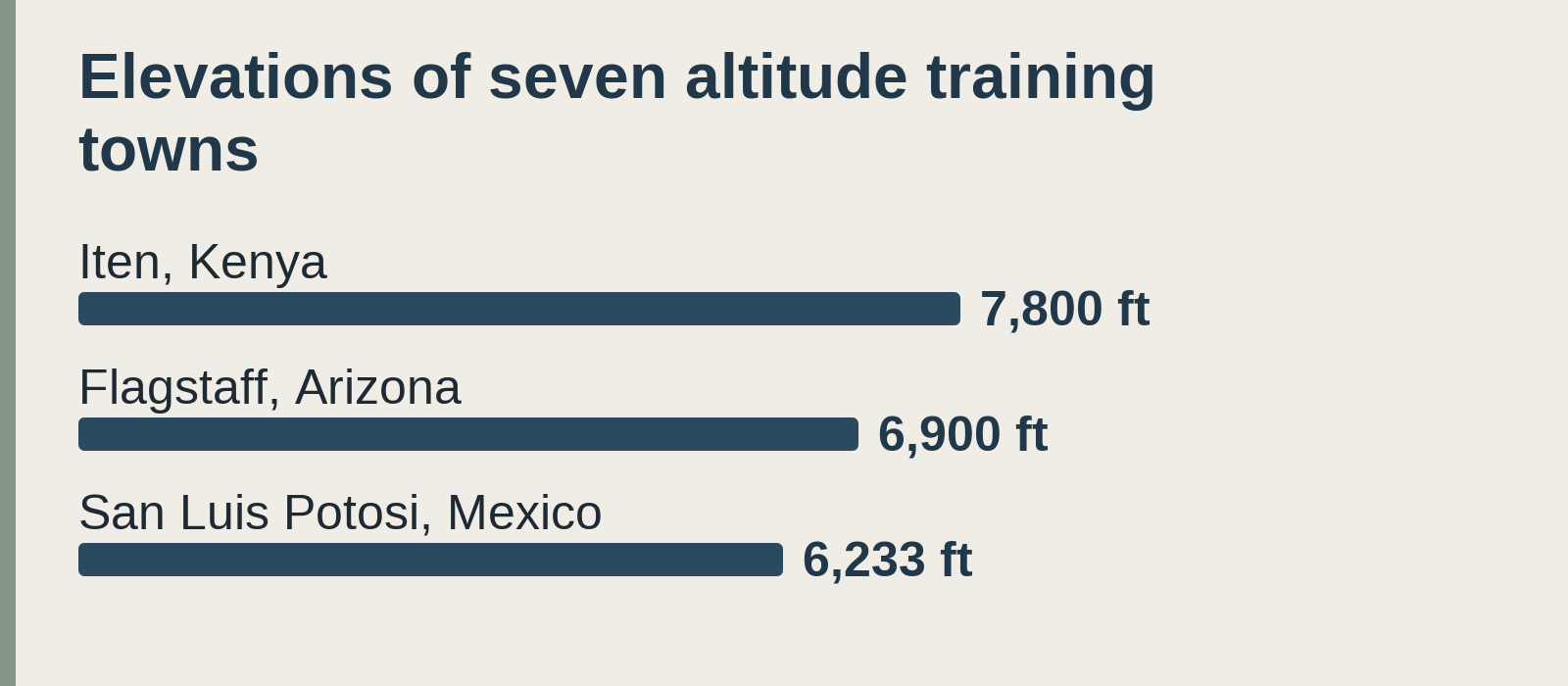
Training at Altitude in Flagstaff
Olympians, college teams and teenage cross country squads, all chasing red blood cells on Flagstaff's dirt roads.
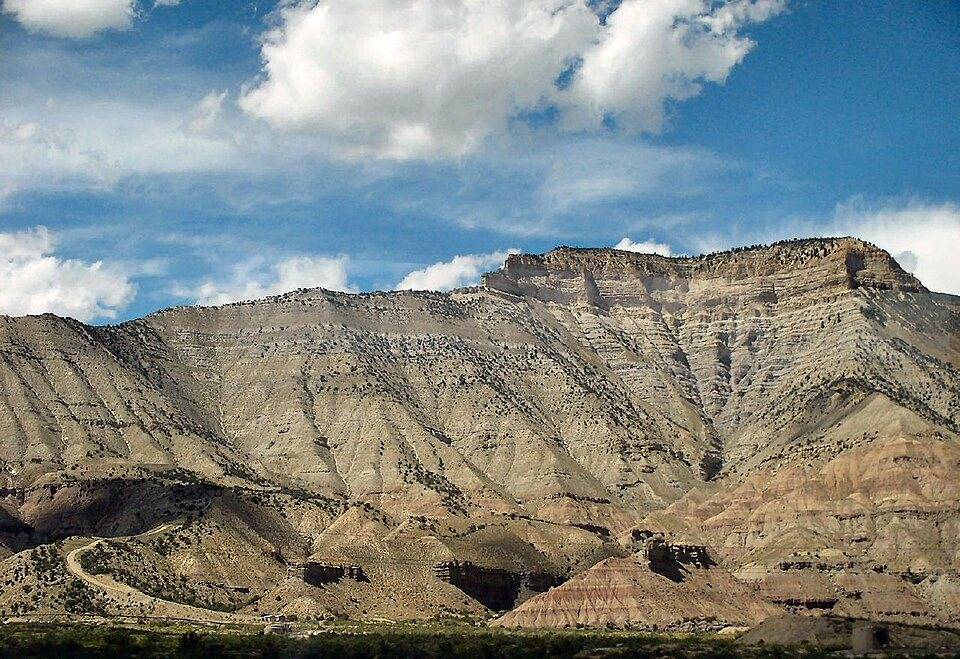
The Colorado Plateau
A layer cake of rock nearly two billion years deep, still rising, and still argued over by geologists.


