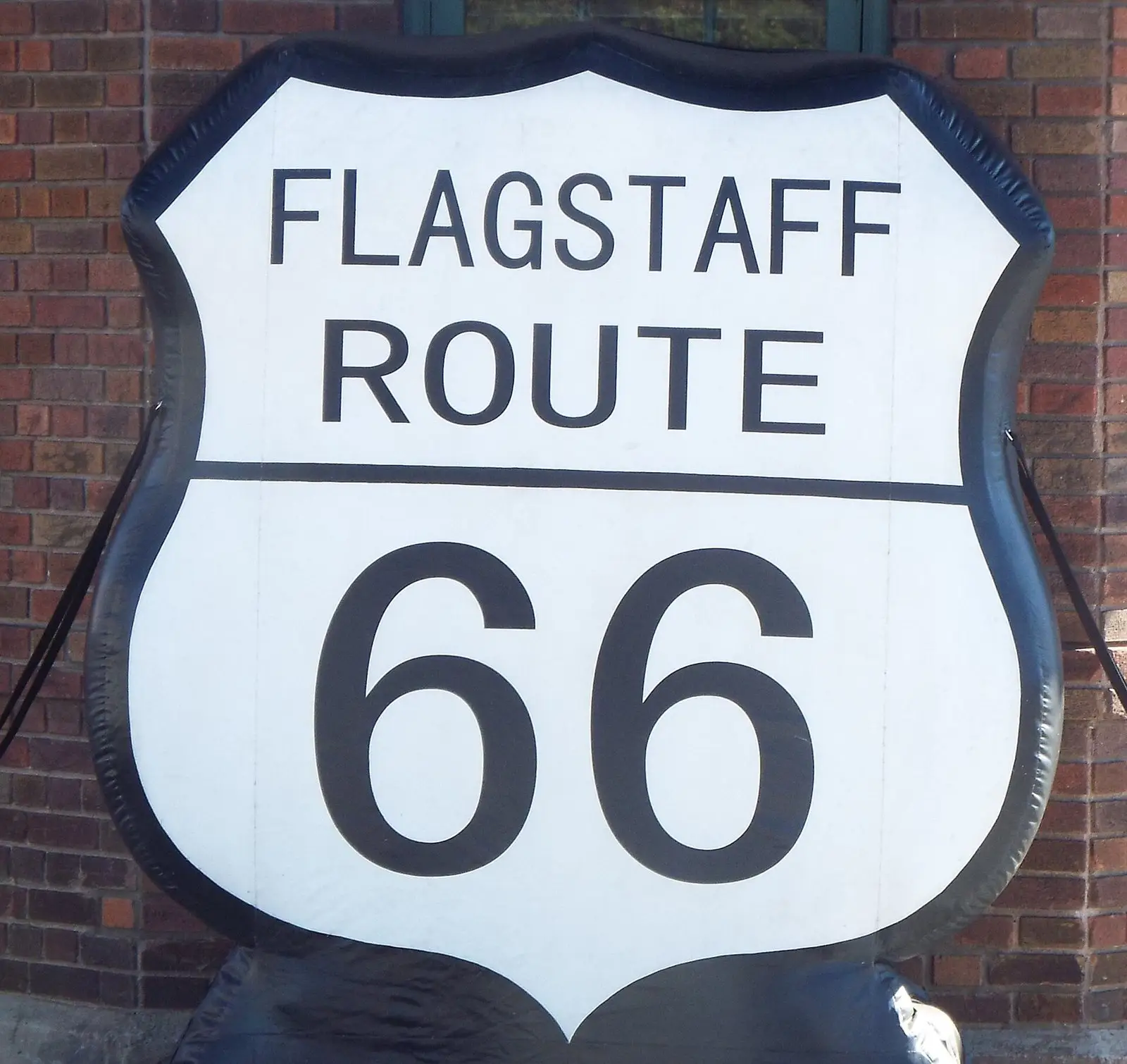
Flagstaff, Arizona, where Anne Newland lives, is a mountain city that old Route 66 runs straight through. After dark, the neon sign on the roof of the Hotel Monte Vista throws a flickering light across much of downtown, as a 2007 Sunset magazine guide to Flagstaff in autumn1 described it. The road itself reached its hundredth year in 2026, and the hotels, motor lodges and roadside oddities it left behind are still in business or on display.
The Mother Road in a railroad town
Route 66 ran from Chicago to Santa Monica, a route Nat King Cole made famous in song, and carried much of the country's westward migration until the interstate highways, Interstate 40 among them, took over its work, according to a 2026 Travel and Leisure guide to Seligman2. Flagstaff was already a transport town when the highway came. By the account of Atlas Obscura's entry on the city's flag staff monument3, a party of settlers from Boston camped near Thomas McMillan's ranch in July 1876, stripped a ponderosa pine and raised an American flag on it for the nation's centennial, and the settlement later took its name from that pole. By 1886 Flagstaff was the largest town on the railroad between Albuquerque and Los Angeles.
Downtown grew up beside the tracks, and a 2002 New York Times weekend guide4 placed its turn of the century historic district on the highway. The Times described the Historic Railroad District as about five square blocks of old brick storefronts, cafes and hotels around Heritage Square. The Weatherford Hotel there dates to 1897 and once lodged Theodore Roosevelt. Sunset noted that the best of downtown's early twentieth century buildings were made of local Moenkopi sandstone, which turns a deep red in sunlight, and that Heritage Square, an outdoor plaza added in the redevelopment of downtown, holds weekend concerts1. The Times sent readers to the Beaver Street Brewery for thin crust pizza and eleven rotating house beers brewed in copper kettles on site.
- 1876Boston settlers raise a flag on a stripped ponderosa pine
- 1886Flagstaff is the largest town on the railway from Albuquerque to Los Angeles
- 1897The Weatherford Hotel opens downtown
- 1927The Hotel Monte Vista opens just off the highway
- 1931The Museum Club opens as a taxidermy museum for road travelers
- 1962The first Muffler Man is sold to Flagstaff's Lumberjack Cafe
- 1985Route 66 is decommissioned; a flag staff monument is dedicated
- 2026The road marks a century
Hotels, motor lodges and a roadhouse
The Museum Club, on the east side of town, is the roadhouse most closely tied to the old highway's traffic. It opened in 1931 as a taxidermy museum aimed at highway travelers, became a nightclub in 1936, and has since hosted Willie Nelson, Waylon Jennings and Bob Wills and His Texas Playboys, according to The New York Times4. Locals call it the Zoo. Ponderosa trunks stand inside the log building, and stuffed bobcats, bears and owls look down from them onto the dance floor.
The Hotel Monte Vista has stood just off the highway since 1927, as Travel and Leisure's 2026 Flagstaff guide5 reports. Sunset described it as a relic of the bellhop era that now draws university students and European tourists to its lobby bar1. On the road itself, two older motor inns have been reworked for a new generation. The Americana Motor Hotel leans into the look of the road's heyday, with heated pools and fire pits, and the High Country Motor Lodge added a sauna and cold plunge. Michael Marquess, who founded Mother Road Brewing in a historic Route 66 building, praised both as reuses of vintage highway property.
“a great reuse of a vintage Route 66 property”Michael Marquess, in Travel and Leisure, Travel and Leisure
| Opened | What it offers now | |
|---|---|---|
| Weatherford Hotel | 1897 | A downtown hotel with an upstairs balcony |
| Hotel Monte Vista | 1927 | Rooms, a lobby bar and a rooftop neon sign |
| Museum Club | 1931 | A log roadhouse with live music |
| Americana Motor Hotel | A vintage motor inn, reworked | Retro rooms, pools and fire pits |
| High Country Motor Lodge | A vintage motor inn, reworked | A sauna, cold plunge and restaurant |
Roadside giants and the town's flag staff
Flagstaff can claim the first of the fiberglass Muffler Men that once stood beside highways across the country. In 1962 Prewitt Fiberglass Animals built a Paul Bunyan figure for a customer in Sacramento, and when that buyer did not pay, the statue went to the Lumberjack Cafe in Flagstaff, according to Atlas Obscura's entry on the first Muffler Man6. Its mold became the pattern for around two hundred more, most of them made by International Fiberglass in the 1960s and 1970s. After the cafe changed hands in the late 1970s the figure went to Northern Arizona University, which repainted it as Louie the Lumberjack; it now stands outside the Walkup Skydome.
The flag staff that named the city is gone. The original pole eventually fell, its exact site was lost, and in 1985 the governor dedicated a replica near where the Boston party had camped, just off North Thorpe Road3. Atlas Obscura's guide to Flagstaff7 lists 23 unusual places in and around the city, five of them tagged Route 66, and its pages include the ruins of the Twin Arrows Trading Post. The longer story of the lumber and rail town is told in the history of Flagstaff.
Why travelers still stop
Route 66 was officially decommissioned in 1985, and towns along it lost their traffic to Interstate 40. A couple of years later, residents of Seligman, west of Flagstaff, led by the barber Angel Delgadillo, formed the Historic Route 66 Association of Arizona to save what was left, and Travel and Leisure credits that town with starting the road's revival2. Seligman is also said to have inspired Radiator Springs, the town bypassed by an interstate in the 2006 Pixar film Cars. By 2026 the old highway's centennial was a reason in itself to drive it, and Seligman planned a party to mark it.
Flagstaff's draw is partly what lies around it. The city's visitor bureau counts seven national parks and monuments within 10 to 80 miles, from Walnut Canyon and Wupatki to the Grand Canyon, whose South Rim alone draws close to five million visits a year8. Travel and Leisure adds the city's height of 7,000 feet, which pulls in cyclists and hikers escaping the desert heat, its 2001 recognition as the first International Dark Sky Place, and Lowell Observatory5. The Times, writing in 2002, put the average September high at 73 degrees and the population at just over 50,0004; Travel and Leisure counted 77,000 residents in 2026. For a driver on the old road, the reasons to stop add up: cool air, a walkable downtown of historic hotels and breweries, and a short drive to the canyon country of the Colorado Plateau.
References
- Experience Flagstaff’s Fall. Sunset, 2007.
- This Arizona Town Is a Hidden Gem Along U.S. Route 66. Travel and Leisure, 2026.
- Monument to the Flagstaff Flag Staff in Flagstaff Atlas Obscura. Atlas Obscura, 2020.
- JOURNEYS; 36 Hours | Flagstaff, Ariz. (Published 2002). The New York Times, 2002.
- Why Flagstaff, Arizona, Is the Ultimate Route 66 Stop. Travel and Leisure, 2026.
- World’s First Muffler Man in Flagstaff Atlas Obscura. Atlas Obscura, 2025.
- 23 Cool and Unusual Things to Do in Flagstaff Atlas Obscura. Atlas Obscura, 2009.
- City of Seven Wonders. Discover Flagstaff.
Further reading online
- SunsetExperience Flagstaff’s Fall
- Travel and LeisureThis Arizona Town Is a Hidden Gem Along U.S. Route 66
- Atlas ObscuraMonument to the Flagstaff Flag Staff in Flagstaff Atlas Obscura
- The New York TimesJOURNEYS; 36 Hours | Flagstaff, Ariz. (Published 2002)
- Discover FlagstaffCity of Seven Wonders
Related entries
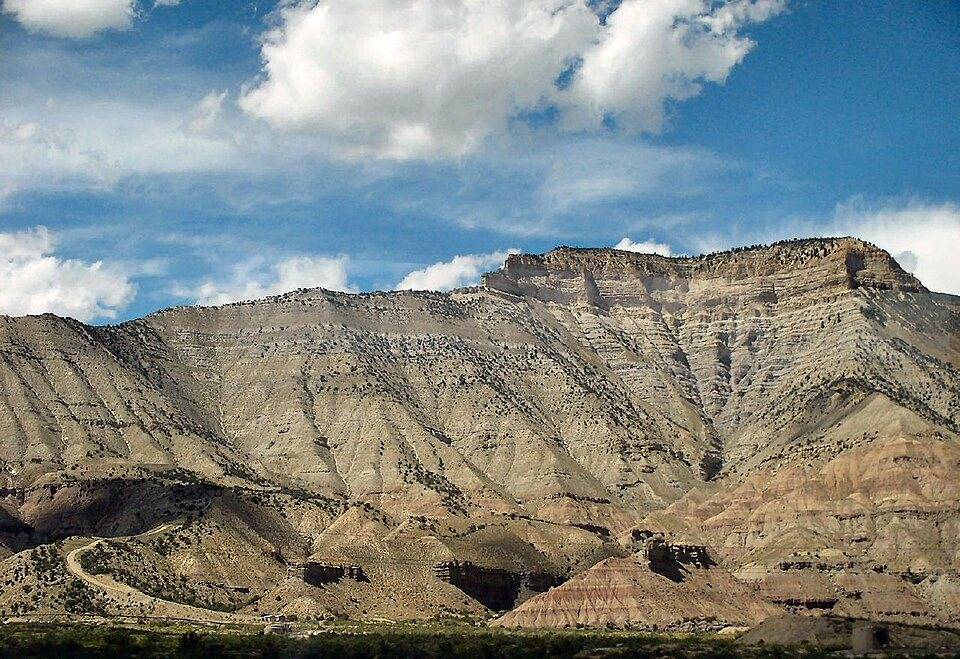
The Colorado Plateau
A layer cake of rock nearly two billion years deep, still rising, and still argued over by geologists.
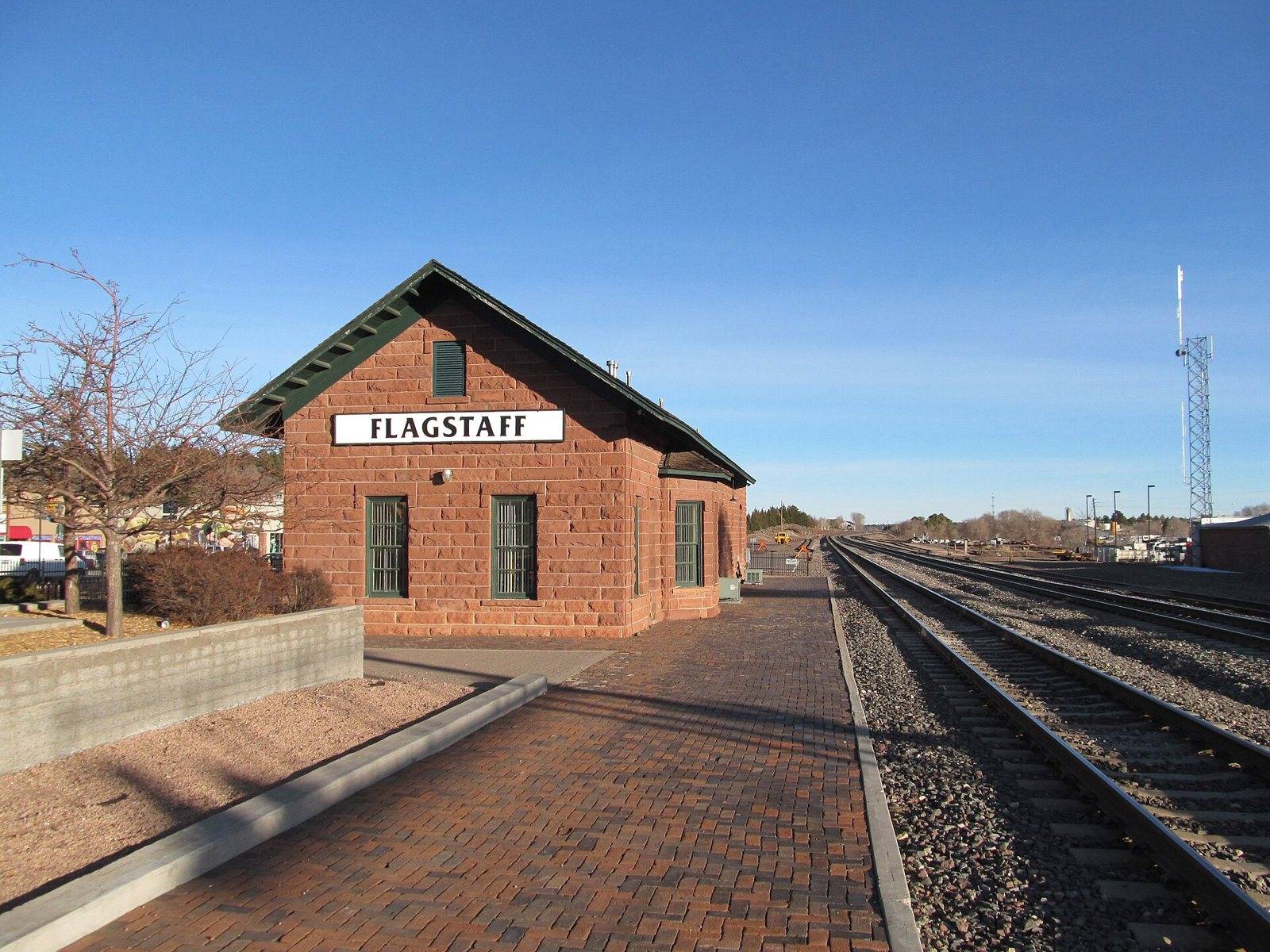
The History of Flagstaff
Tracks, sawmills, a hilltop telescope and a teachers college: the pieces that made a northern Arizona city.
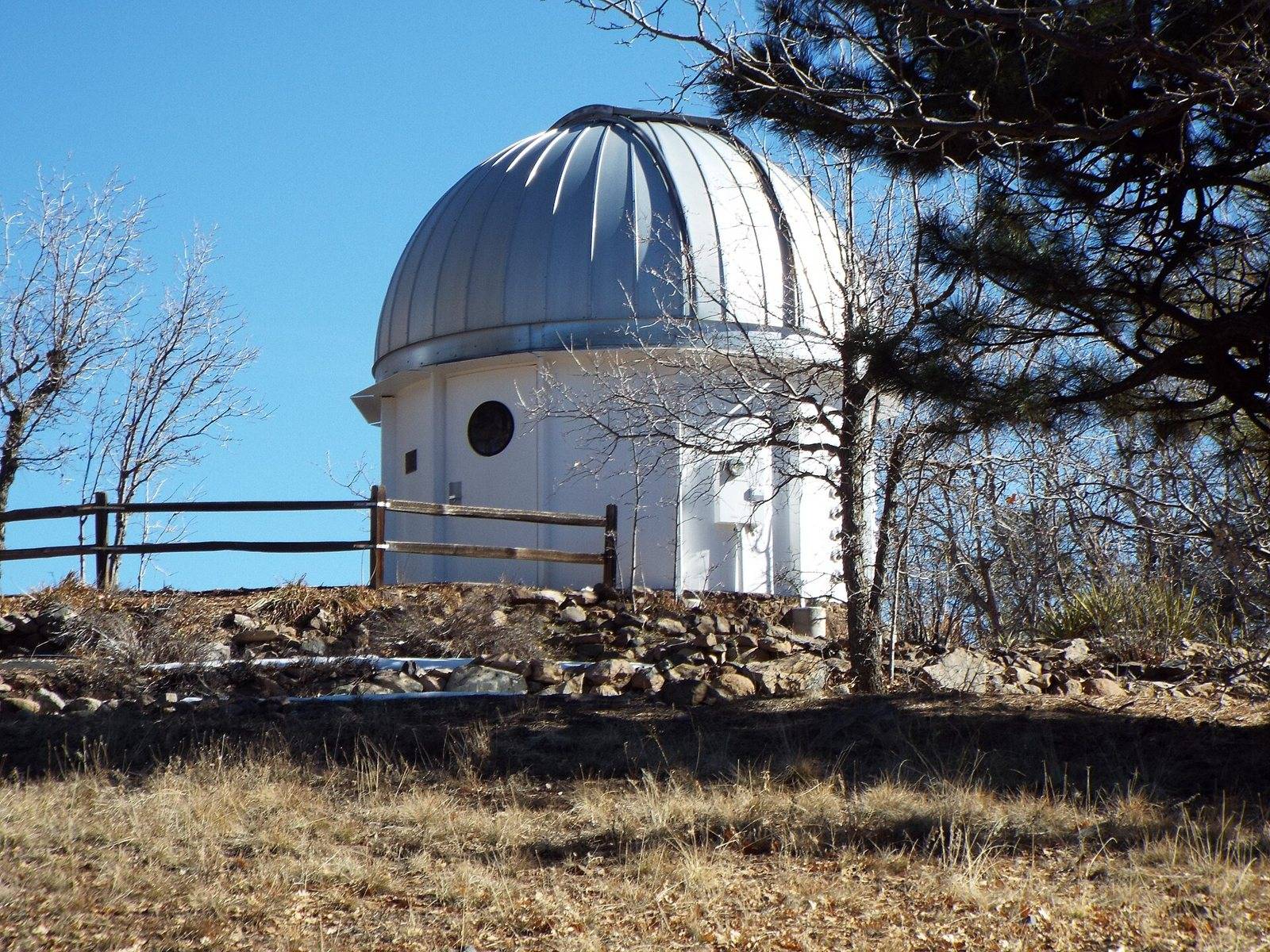
Lowell Observatory
Martian canals that were never there, a farm boy's telescope and a planet found by blinking two photographs.


