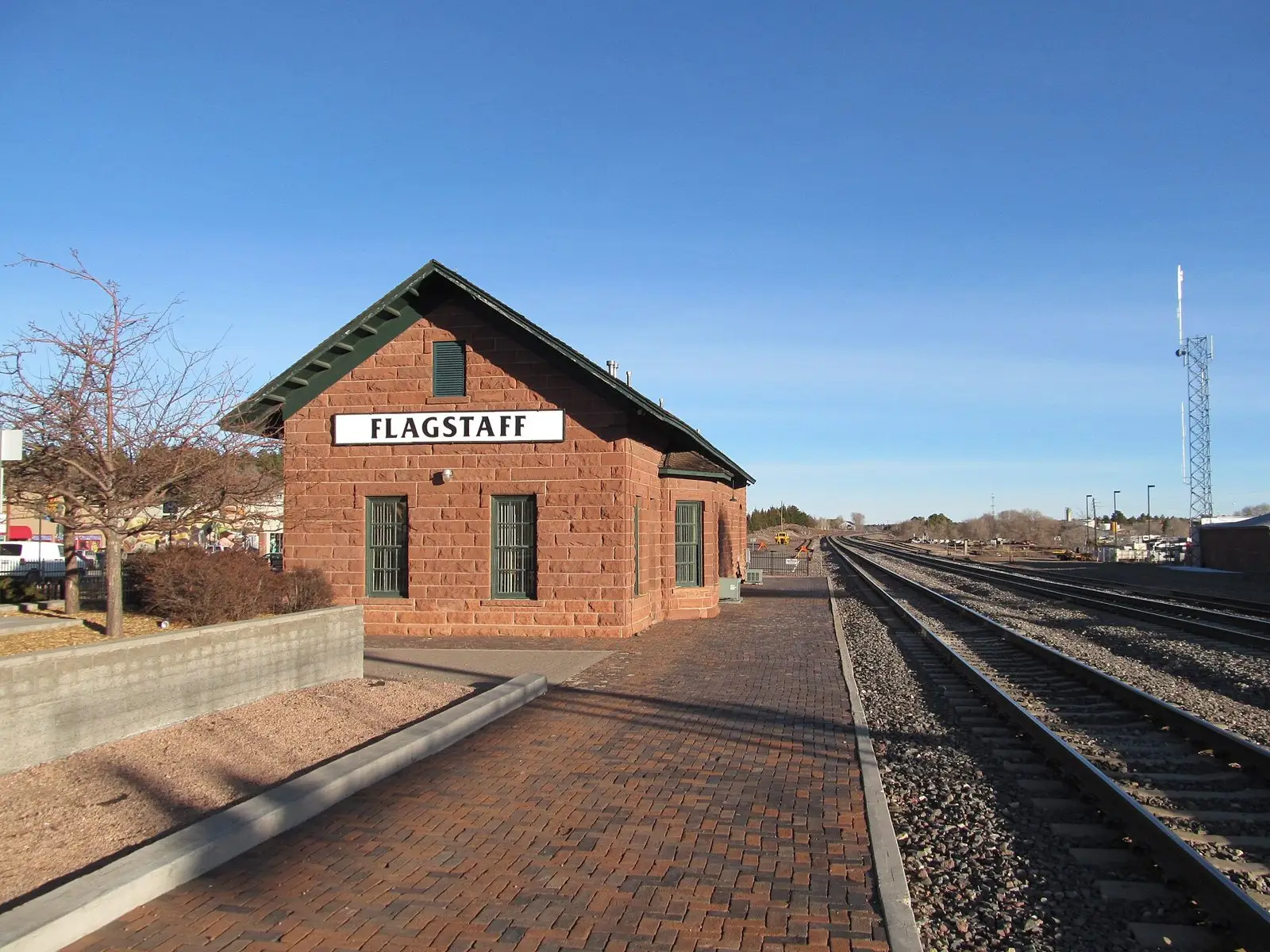
Flagstaff, Arizona, where Anne Newland both lives and works, started its days to the sound of a lumber mill whistle long before it had a university or a famous observatory. Picture that whistle at dawn on the south side of the tracks, where, according to an NAU story on the Southside neighborhood1, African American mill workers, Basque sheepherders and Italian and Mexican immigrants made one of the oldest parts of town.
The rest of the story follows from the rails. Trains made the timber trade pay, then brought tourists, then carried the highway that replaced them. Along the way the town picked up a hilltop telescope, a teachers college and a reputation as a base for the canyon country.
The railroad made the town
The Atlantic and Pacific Railroad laid track across northern Arizona and New Mexico in the 1880s, and the Santa Fe bought the line by 1885, putting Flagstaff on an unbroken rail route between St. Louis and the Pacific, says the National Park Service entry for the Railroad Addition Historic District2. Lumber, cattle and sheep could now reach distant markets, and those industries grew quickly. After a fire in 1888 the railroad built a sandstone depot that became the geographic center of the young town2.
The Park Service points out a detail any walker can still check: every building along Santa Fe Avenue faces the tracks2. Tourism had become an important business by 1895, with visitors coming for the cool summers and for the Grand Canyon, Oak Creek Canyon, Walnut Canyon and the San Francisco Peaks2.
A lesson plan from Cline Library at Northern Arizona University3 asks schoolchildren to sort the town's milestones into order, among them the naming of Flagstaff, the building of the Lake Mary dam, a flood on the Rio de Flag, Emerson School and the founding of the Northern Arizona Normal School. The page lists those events without dates, which is a reminder of how much local history lives in archives rather than on plaques.
- 1880sThe Atlantic and Pacific Railroad lays track through Flagstaff
- 1888A fire leads to the sandstone depot at the center of town
- 1894Percival Lowell founds his observatory on a hill above town
- 1926A new depot opens and U.S. Highway 66 is commissioned
- 1983The downtown district joins the National Register of Historic Places
- 1987The city drafts a master plan to revive downtown
Telescopes, a college and a tourist trade
In 1894 Percival Lowell set up an observatory in Flagstaff to search for life on Mars, and two years later he had Alvan Clark and Sons build a 24 inch refracting telescope for it, according to the Lowell Observatory historic timeline4. Working there in 1912, V.M. Slipher measured the redshifts of galaxies and made the first detection of an expanding universe4. The founder died in 1916 at 61 and was entombed near the Clark telescope4. More on the hill and its discoveries is in the entry on Lowell Observatory.
The roads followed the rails. The National Old Trails Road traced the railroad through town in the 1910s, and in 1926 the Santa Fe opened a grander Tudor Revival depot that now serves as the Flagstaff Visitor Center2. U.S. Highway 66 was commissioned that same year, and residents raised money for the Hotel Monte Vista, which drew Hollywood names such as Gary Cooper and Spencer Tracy2. In 1929 the Motel Du Beau offered units with garages for motorists at $2.60 to $5.00 a night2.
By 1964, a New York Times travel article5 counted 19,000 residents at the crossing of U.S. 66 and U.S. 89. It called Flagstaff the seat of Coconino County, the second largest county in the nation at about 19,000 square miles, and listed the observatory where Pluto was found in 1930 and the Museum of Northern Arizona among its draws5.
The Southside and its schools
South of the tracks and Route 66, the Southside sits between downtown and the NAU campus1. Its Dunbar School was a segregated school where Cleo Wilson Murdoch taught and served as principal before her death at 39, and the building later became the Murdoch Community Center after residents fought to keep it from being torn down1.
Wilson Riles, one of the first Black students at what was then Arizona State Teachers College, also served as Dunbar's principal. In 1953 he worked with Superintendent Sturgeon Cromer to desegregate the city's public schools, a year before the Supreme Court ruled against school segregation1. Student researchers working with Ricardo Guthrie's Historic Southside Project have since built a digital Southside Green Book, modeled on the guides that listed safe lodging and meals for Black travelers between 1936 and 19671.
The city has added public markers of that past. In December 2025, a City of Flagstaff announcement6 described "Rustle," an eight foot weathering steel sculpture by Beth Nybeck at Cleo Murdoch Park, and a Historic Dunbar School plaque by Marie Jones that lets readers look down at the school's original foundation stones. A 2024 focus group of Southside residents shaped the themes, and one idea stood out above the rest: that the neighborhood should not be forgotten6.
“We need to be mindful of the history a place has”Ty Holliday, NAU geography student, on the Southside project, Northern Arizona University
What the railroad left behind
World War II brought a large ammunition depot and heavy traffic on Route 66, and tourism boomed once the war ended2. Then Interstate 40 pulled business away from the old highway and the center of town; during the 1970s and 1980s many shops moved out and downtown declined2. The district won a place on the National Register in 1983, and a 1987 master plan set out to make it a regional center again2.
| 1964 | 2008 | |
|---|---|---|
| How it was described | Hub of the canyon country | A compact college town |
| Main roads named | U.S. 66 and U.S. 89 | Reached by car from the nearest big airport |
| Lodging named | Campgrounds along Oak Creek | The Hotel Monte Vista |
| Nearby draws | Walnut Canyon, Sunset Crater, Wupatki | The Grand Canyon and Sedona trails |
By 2008 a New York Times travel column7 was recommending Flagstaff as a small college town of modest hotels and busy nightlife, a mix of students, backpackers and longtime residents, with the Hotel Monte Vista as its first lodging pick. The 1926 hotel was still taking guests2.
Some survivals took effort. The house where May Hicks Curtis sewed the first Arizona state flag in 1911 was named one of America's 11 Most Endangered Historic Places in May 2025, and the city took ownership and moved it to save it from demolition, with help from a Preserve Route 66 grant, as a City of Flagstaff notice8 explains. What the railroad left behind is easy to read on the ground: a depot turned visitor center, a downtown of buildings from the late 1880s to the 1940s, a neighborhood that grew up beside the tracks, and streets that still turn their faces toward the trains2. Nearby, the dark skies, the volcanic field and the San Francisco Peaks complete the picture of the town in its setting.
References
- Black history in Flagstaff’s Southside neighborhood | NAU Stories. Northern Arizona University, 2023.
- Arizona: Railroad Addition Historic District and Boundary Increase (U.S. National Park Service). National Park Service.
- Flagstaff History Timeline: Part Two. Northern Arizona University.
- Historic Timeline Lowell Observatory. Lowell Observatory, 2026.
- HUB OF THE CANYON COUNTRY; Flagstaff Is Centrally Situated for Tourists Planning To Explore Wonders of Nature in the U.S. Southwest (Published 1964). The New York Times, 1964.
- News Flash Archive New art projects celebrate Southside history and community in Flagstaff. City of Flagstaff.
- Flagstaff, Ariz., or Salt Lake City, as a Mountain Retreat. The New York Times, 1210.
- News Flash Archive May Hicks Curtis House in Flagstaff chosen for America’s 11 Most Endangered Historic Places. City of Flagstaff.
Further reading online
- Northern Arizona UniversityBlack history in Flagstaff’s Southside neighborhood | NAU Stories
- National Park ServiceArizona: Railroad Addition Historic District and Boundary Increase (U.S. National Park Service)
- Lowell ObservatoryHistoric Timeline Lowell Observatory
- The New York TimesHUB OF THE CANYON COUNTRY; Flagstaff Is Centrally Situated for Tourists Planning To Explore Wonders of Nature in the U.S. Southwest (Published 1964)
- City of FlagstaffNews Flash Archive New art projects celebrate Southside history and community in Flagstaff
Related entries
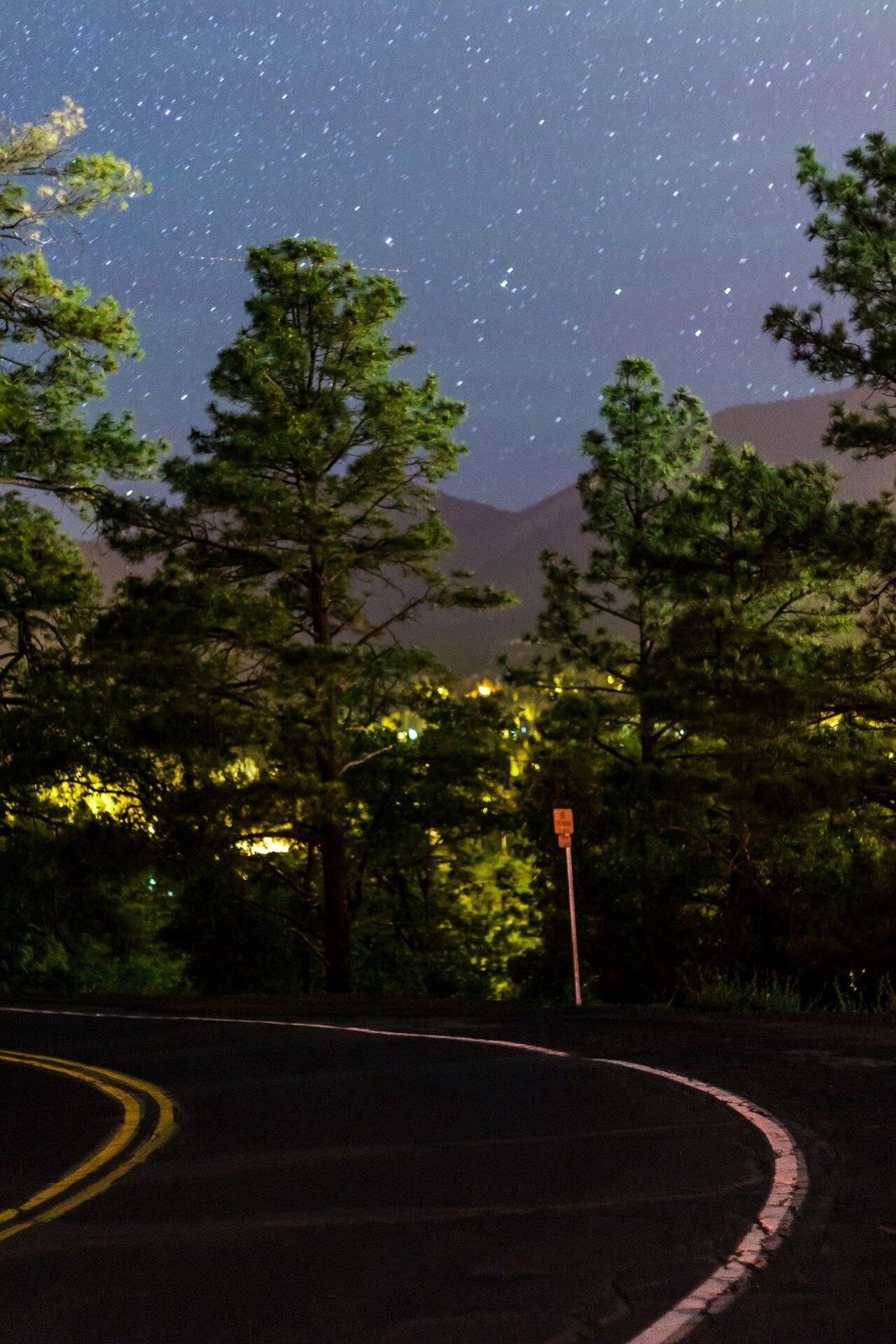
The Dark Skies of Flagstaff
Shielded fixtures, amber bulbs and a 1958 ordinance kept the Milky Way visible over a growing city.
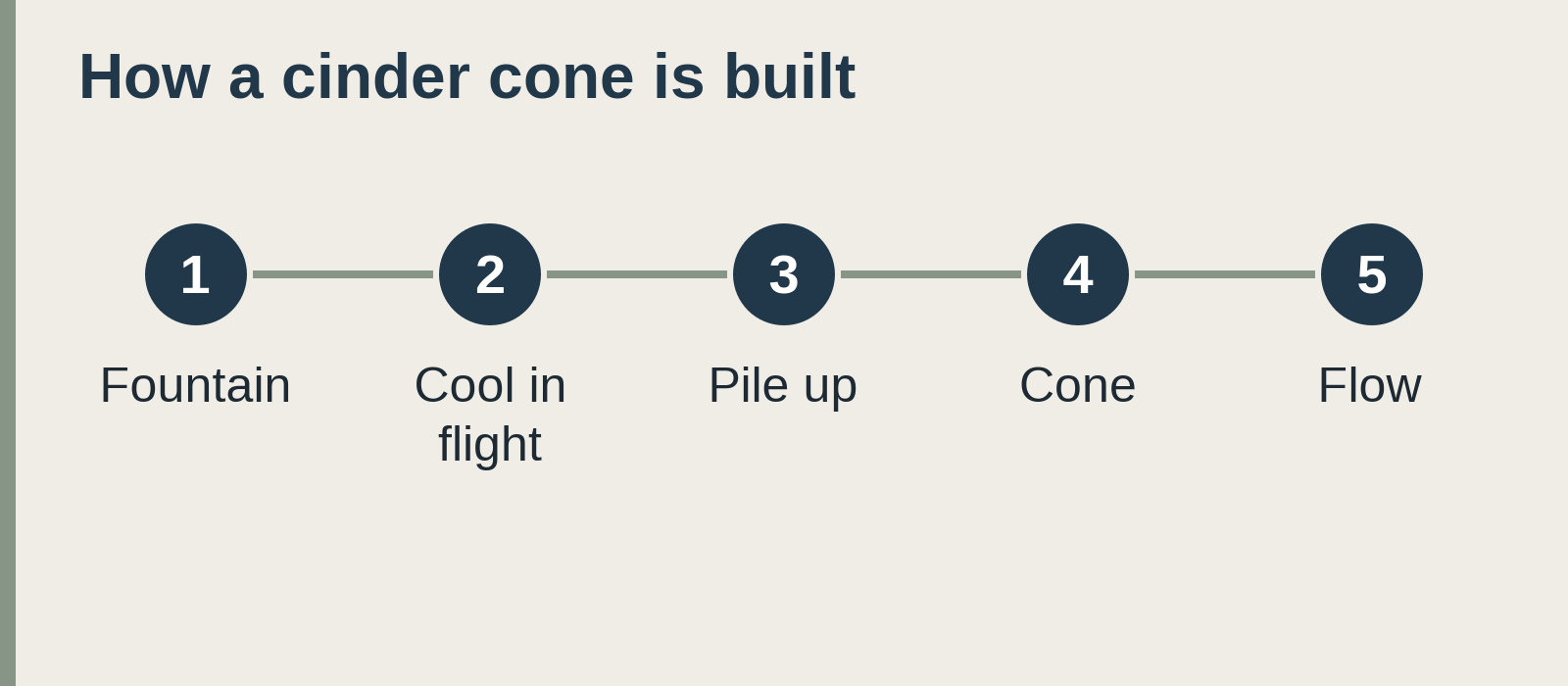
The San Francisco Volcanic Field
Cinder cones built in months, a mountain that lost its core, and an eruption the Sinagua saw.
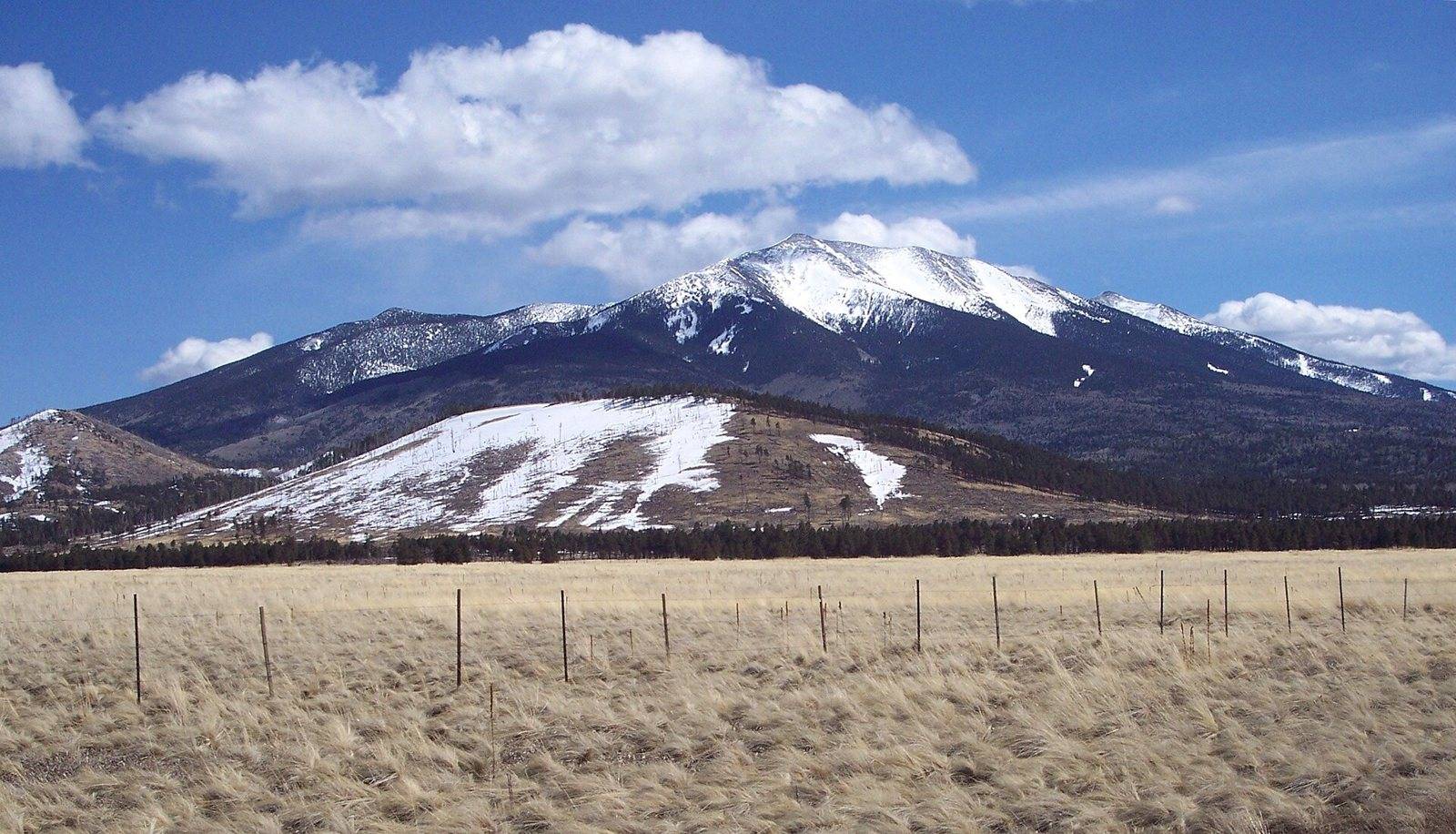
The San Francisco Peaks
A collapsed volcano, golden aspens in October and ski slopes that can take 31 inches in one storm.


