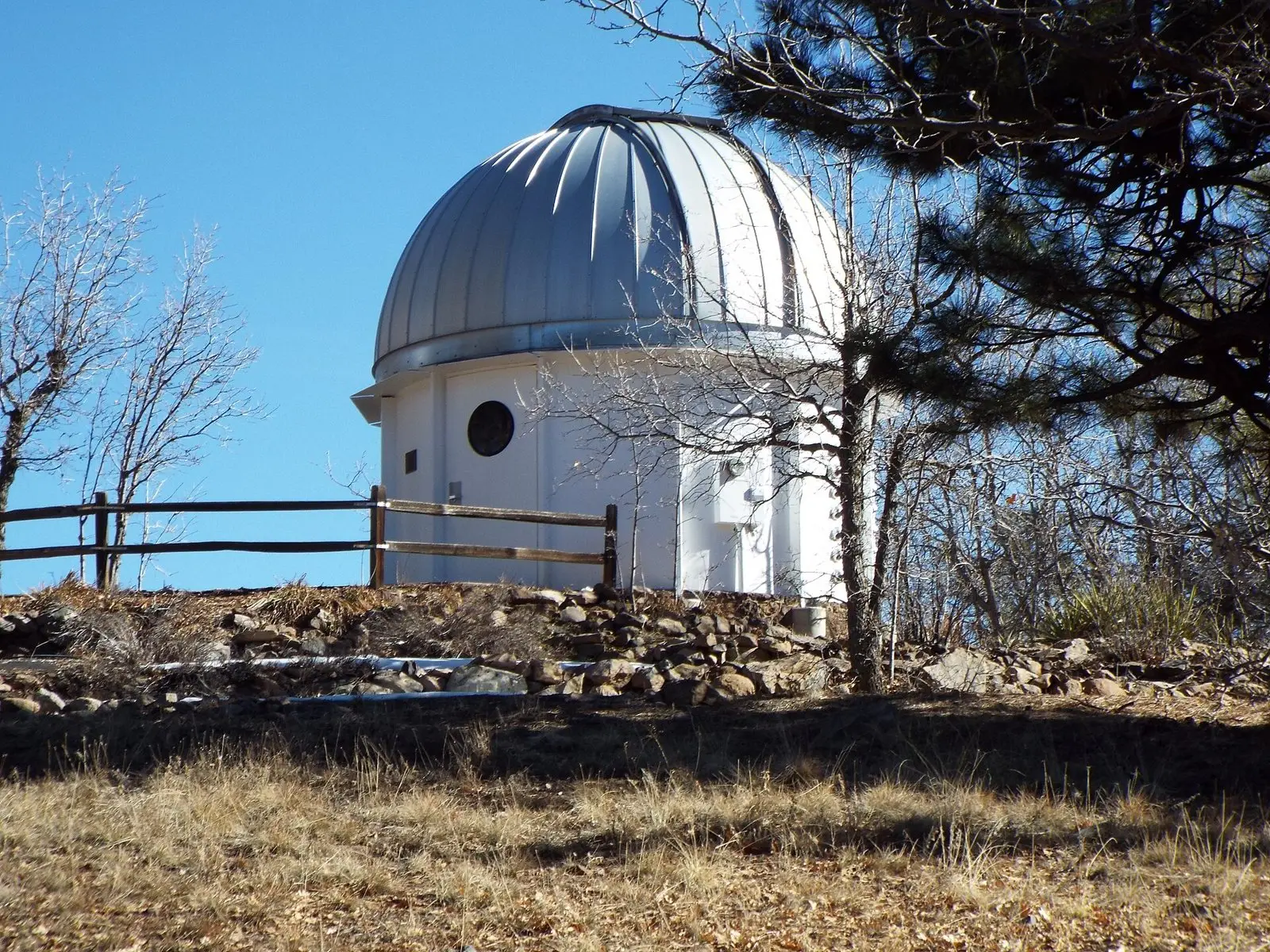
Anne Newland, who lives and works in Flagstaff, Arizona, shares the town with the observatory on Mars Hill, where a telescope dome opening at dusk has signaled the start of a working night for more than a century. Among the telescopes it still operates is the original 24 inch Clark refractor, as a Space.com profile of Lowell Observatory1 notes.
The institution was founded in 1894 and is best known for the discovery of Pluto, but its record also includes comet studies, stellar surveys and a 2007 exoplanet find1. Its founder's mistakes are nearly as famous as its successes, and both shaped what came next.
Percival Lowell and the canals of Mars
Percival Lowell was born on March 13, 1855, into a wealthy Boston family, graduated from Harvard in 1876 with a degree in mathematics, worked in the family textile business and wrote several books about East Asia, according to a Space.com biography2. In the 1890s he read of Giovanni Schiaparelli's "canali" on Mars, and the English rendering as canals fired his imagination2.
To be ready for the close approach of Mars in 1894, he built an observatory in Flagstaff and soon announced canals and oases that he took for the work of a dying civilization2. He spread the idea in lectures and in three books, "Mars" in 1895, "Mars and Its Canals" in 1906 and "Mars As the Abode of Life" in 19082. A Smithsonian magazine piece3 adds that his enthusiastic reading of the canals alienated his own assistants and annoyed Schiaparelli.
“Lowell's observations were as accurate as they could be for their time”Kyle Chayka in Popular Mechanics, as quoted by Smithsonian magazine, Smithsonian magazine
Spokes on Venus and other misreadings
Lowell also turned the telescope on Venus in 1896 and reported spokes radiating from a hub, but only when he narrowed the opening of the instrument to between 1.6 and three inches3. His assistants could not draw what he drew, except his secretary, Wrexie Louise Leonard; historians William Sheehan and Thomas Dobbins concluded that stopping the telescope down so far had turned it into a device for seeing the inside of his own eye3.
The canals fared no better. Other astronomers could not see them, and in 1965 Mariner 4 photographed Mars up close, followed in 1972 by the full mapping of Mariner 9, with no canals in either2.
Saturn's rings in 1907
Not every claim from Mars Hill was fanciful. In November 1907 Lowell sent a letter to The New York Times4 arguing that Saturn's rings are a swarm of small particles that collide under the pull of the moons, lose energy and slowly fall toward the planet. He pointed to brightenings in the outer half of Ring B and throughout Ring C, and to a dark line about one fifth the width of the ring shadow, measured at Flagstaff with his colleague Mr. Lampland, as the letter names him4.
The same page carried a friend's defense against a charge that Lowell was more imaginative than mathematical4. Ring science had a long pedigree by then: the observatory's own history blog recalls that Giovanni Cassini found divisions in Saturn's rings in the 1600s, showing they were many rings rather than one5.
The hunt for Planet X
Lowell calculated that a ninth planet was tugging on Uranus and Neptune and called it Planet X. The Space.com biography dates the start of the search to 1905, while the Smithsonian account puts it in 190623. Cameras photographed the same patch of sky on different nights so observers could look for anything that moved2.
Lowell died at Mars Hill on November 12, 1916, at 61, leaving a bequest of about a million dollars for the search. His widow contested the gift and the dispute drained most of it, yet the search resumed2.
- 1894Lowell builds his observatory to watch Mars at close approach
- 1905The photographic search for Planet X begins
- 1916Lowell dies at Mars Hill at age 61
- 1930Clyde Tombaugh spots Pluto moving on plates taken in January
- 2006Pluto is reclassified as a dwarf planet
- 2012The Discovery Channel Telescope sees first light
How Clyde Tombaugh found Pluto
Clyde Tombaugh was born near Streator, Illinois, on February 4, 1906, and grew up on a Kansas farm, where a hailstorm wrecked the crops and his hopes of college, says a Space.com profile of Tombaugh6. He ground his own mirrors and in 1928 built a 23 centimeter reflector from the crankshaft of a 1910 Buick and parts of a cream separator. He mailed his drawings of Jupiter and Mars to Lowell Observatory, which answered with a job6.
His tool was the blink comparator, which flipped between two photographs of the same sky taken days apart; stars held still while nearer objects jumped6. Each pair held 150,000 stars or more and took about a week to study. On February 18, 1930, he saw a dot shift between plates taken a month earlier, and the observatory announced the new planet on March 136. The plates came from a 13 inch telescope paid for by Abbott Lawrence Lowell, the founder's brother1.
Eleven year old Venetia Burney of England proposed the name Pluto, and the planet's symbol contains Percival Lowell's initials62. Pluto was reclassified as a dwarf planet in 2006, and some of Tombaugh's ashes ride aboard the New Horizons spacecraft6.
Research after Pluto
Later work on the hill tracked dust and ice from Halley's Comet during its 1985 and 1986 passage, helped detect Pluto's atmosphere and fixed the orbits of its moons Nix and Hydra1. Harold Johnson created a basic scale of stellar temperature in the 1950s, and Henry Giclas spent his whole career surveying how stars move1. In 2007 a Lowell team announced TrES 4, a puffy planet about 1.7 times the size of Jupiter with roughly the density of balsa wood1.
Ground was broken in 2005 at Happy Jack for the Discovery Channel Telescope, a $35 million instrument meant to survey the sky for near Earth asteroids and Kuiper Belt objects, as a 2005 Space.com report7 described. The two Space.com articles differ on its mirror, 4.2 meters in 2005 and 4.3 meters in 2013, and on timing: first light was planned for 2009 but came in 201271. The observatory's 2026 news lists suggest the work continues, from a report that asteroid (44) Nysa may be the first known three lobed world to a profile of research scientist Dave Schleicher of its Hendricks Center for Planetary Studies85.
| Lowell's claim | Later finding | |
|---|---|---|
| Mars | Canals built by a dying civilization | Mariner 4 and Mariner 9 found no canals |
| Venus | Spokes radiating from a hub | Likely an image of his own eye |
| Planet X | A massive world disturbing Neptune | Pluto proved far too small to do it |
Why astronomers chose this hill
Lowell went looking for a site where he could watch Mars well, and he settled on Flagstaff for its high altitude, thin air and remoteness, according to the Space.com biography2. The observatory profile gives the same reasons: altitude and a thin atmosphere1.
The choice outlived the theory it was meant to serve. The observatory now works at three sites in Arizona and bills itself as a place for long studies that a few nights of telescope time cannot capture1. Time magazine named it one of its 100 most important places in 20113. The same thin, dark air that drew Lowell is the reason the town later fought to keep its dark skies, and the cinder cones of the San Francisco volcanic field and the snowy San Francisco Peaks frame the view from the domes.
References
- Lowell Observatory: Where Pluto Was Discovered. Space.com, 2013.
- Percival Lowell Biography. Space.com, 2013.
- The Bizarre Beliefs of Astronomer Percival Lowell. Smithsonian magazine, 2017.
- SATURN'S PERTURBED RINGS.; A Discovery at the Flagstaff Observatory Confirmatory of the Theory That They Are Breaking Up and Falling In Upon the Planet. PROF. LOWELL DEFENDED. Not a Spiritualist and N. The New York Times, 1907.
- This Week in Astronomy History: June 7 13 Lowell Observatory. Lowell Observatory, 2021.
- Clyde Tombaugh: Astronomer Who Discovered Pluto. Space.com, 2013.
- Media Meets Science: New Telescope a Team Effort. Space.com, 2005.
- This Week in Astronomy History: April 26 May 2 Lowell Observatory. Lowell Observatory, 2021.
Further reading online
- Space.comLowell Observatory: Where Pluto Was Discovered
- Smithsonian magazineThe Bizarre Beliefs of Astronomer Percival Lowell
- The New York TimesSATURN'S PERTURBED RINGS.; A Discovery at the Flagstaff Observatory Confirmatory of the Theory That They Are Breaking Up and Falling In Upon the Planet. PROF. LOWELL DEFENDED. Not a Spiritualist and N
- Lowell ObservatoryThis Week in Astronomy History: June 7 13 Lowell Observatory
Related entries
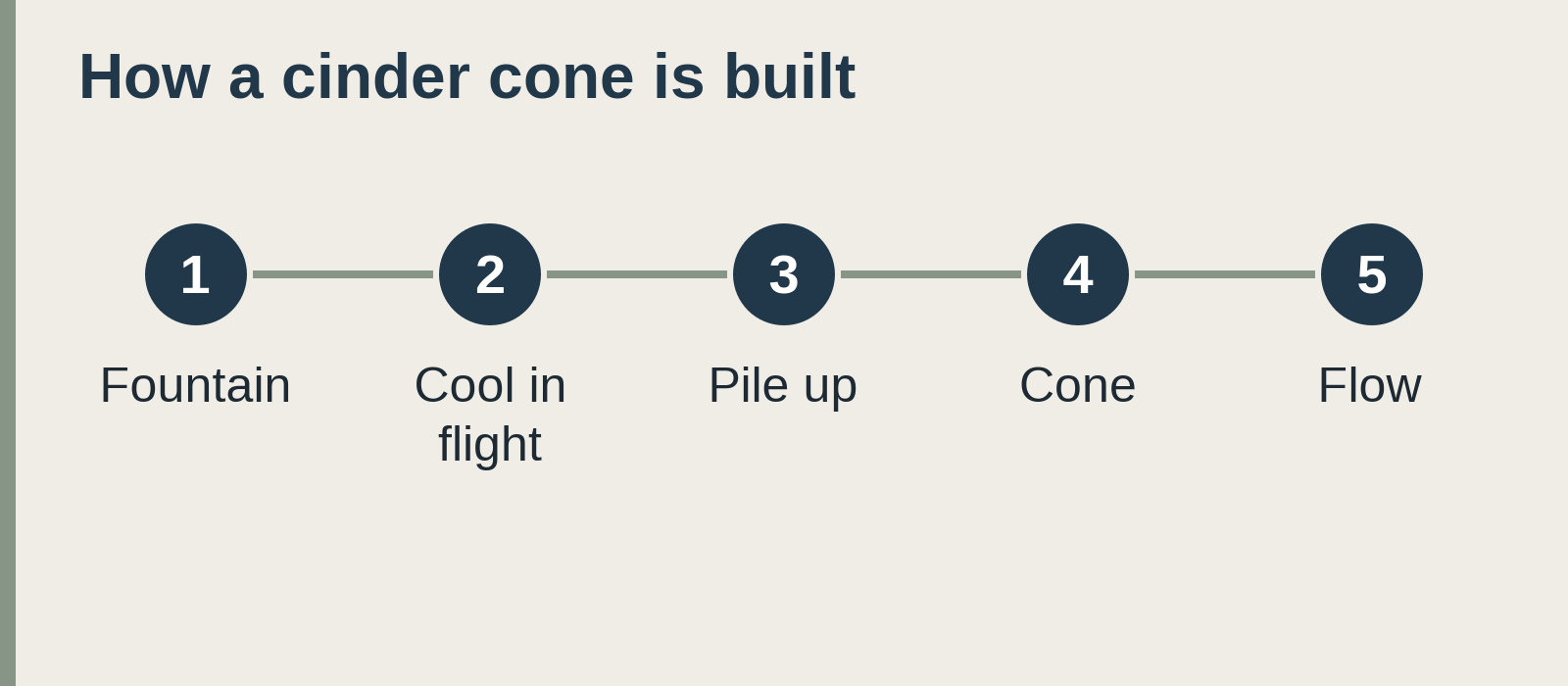
The San Francisco Volcanic Field
Cinder cones built in months, a mountain that lost its core, and an eruption the Sinagua saw.
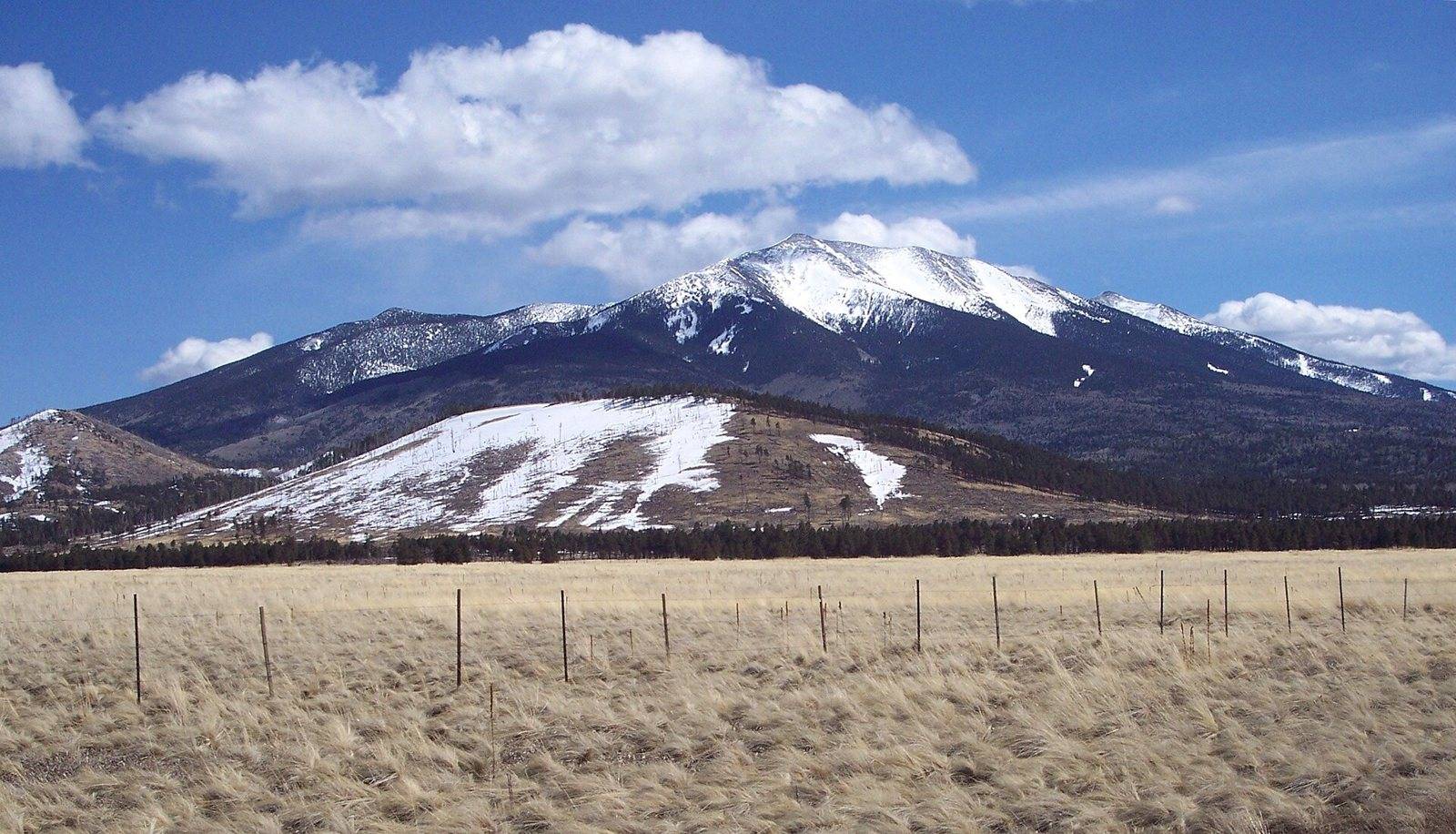
The San Francisco Peaks
A collapsed volcano, golden aspens in October and ski slopes that can take 31 inches in one storm.
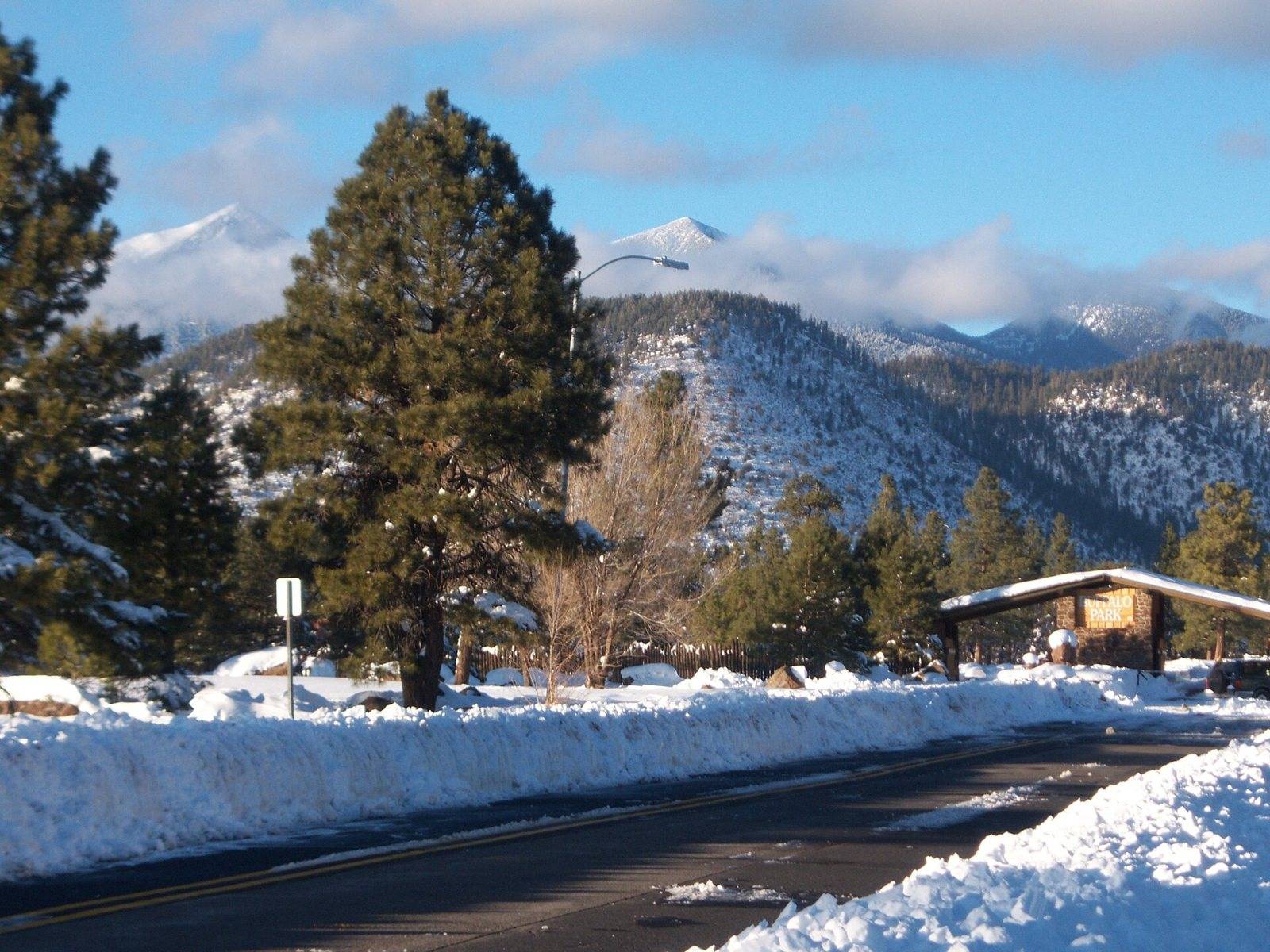
Winter in Flagstaff
Higher than Denver, fed by Pacific storms and the Mogollon Rim, and still learning to plow around bike lanes.


