
Anne Newland makes her life and her work in Flagstaff, Arizona, a city where the streetlights are shielded downward and the Milky Way can be seen from downtown. The shielding is required by law, so outdoor fixtures cannot throw light at the sky, and the city also caps how many lumens of outdoor light each acre may carry, according to a December 2025 New York Times feature on the city's night sky1.
Many of those fixtures are amber LEDs, chosen because they give off little of the green and blue light that makes it harder for eyes to adjust to darkness1. The payoff is a sizable city where a stargazer can stay inside the city limits and still find the Milky Way.
How Flagstaff wrote its lighting rules
The rules began with astronomers. Researchers at Lowell Observatory pushed the city to pass a lighting ordinance in 1958, the Times reports1. The city's own dark sky history2 identifies it as Ordinance 400 and says it dealt with searchlights; DarkSky International describes the same measure as the world's first outdoor lighting ordinance3.
Three decades later, in 1989, both the city and Coconino County approved zoning codes that limited the amount of light per acre, and those codes have been revised and tightened since2. On October 24, 2001, the International Dark Sky Association named Flagstaff the first International Dark Sky City in the world, citing its balance between protecting the night sky and concerns about public safety and the economy2. DarkSky's page for the city3 credits the original proposal to the Flagstaff Dark Sky Coalition. The Times adds that residents asked the association to create a worldwide recognition program in 2001 and that Flagstaff became its first member that same year; retired astronomer Chris Luginbuhl helped write the proposal1.
- 1958Ordinance 400 addresses searchlights, at the urging of astronomers
- 1989City and county zoning codes limit outdoor light per acre
- 2001Flagstaff becomes the first International Dark Sky City, on October 24
- 2016Three nearby national monuments become a Dark Sky Park
- 2025DarkSky names Flagstaff its Dark Sky Place of the Year
Dark skies made the area attractive to science, and science in turn defended them. The city's history lists the astronomy employers that grew up under the policy: the Discovery Channel Telescope, Lowell Observatory, the Navy Prototype Optical Interferometer, the U.S. Naval Observatory and the USGS Astrogeology Center2. The Naval Observatory station measures the positions of stars, and the Geological Survey center maps the Moon and planets1.
The city treats the job as unfinished. Its history page says the standards must keep evolving to deal with illuminated signs, air pollution and new building near major instruments, and it cites the ecological and human health value of a natural cycle of light and dark2.
The results have been measured. In images taken by the National Park Service, Flagstaff gave off roughly 14 times less light at night than Cheyenne, Wyoming, a city of similar size, and its light pollution spread over an area eight times smaller, DarkSky reported5. The same report said the sodium lamps that then lit most Flagstaff streets emitted only red and yellow light, which does less harm to the night sky5. Since then the city has turned to amber LEDs; Danielle Adams of the Flagstaff Dark Skies Coalition told the Times that switching from broadband white LEDs to narrow band amber ones can cut sky glow by as much as 90 percent, and the coalition hands out free amber bulbs1.
Buffalo Park, a couple of miles from downtown, rates about a 4 on the Bortle scale of light pollution, and a sky must be darker than 5 for the Milky Way to show1. The rules have also caused friction: neighbors have quarreled over bright porch lights and holiday displays, most recently a giant inflatable reindeer1.
“you lose a connection to the universe”Chris Luginbuhl, retired astronomer, to The New York Times, The New York Times
What a town gains by dimming
Flagstaff's example spread outward. DarkSky's overview of its certification program6 says the International Dark Sky Places program was created to encourage other communities and protected areas to follow Flagstaff's lead, and that more than 200 places have been certified since 2001, covering over 160,000 square kilometers in 22 countries on six continents. The Times puts the count at more than 250, and neither source says exactly when its tally was taken16. The program received a National Environmental Excellence Award in 20156.
The nearby public lands benefit too. In 2016 the National Park Service and the association named Sunset Crater Volcano, Walnut Canyon and Wupatki, together the Flagstaff Area National Monuments, an International Dark Sky Park, as the DarkSky announcement4 records. The three monuments produce very little light of their own, with almost none at Wupatki; staff gathered data, retrofitted park lighting and held astronomy events with the city, the Flagstaff Dark Skies Coalition and Lowell Observatory4. DarkSky's page for the park7 notes that the three units are managed as one property, which is why they share a single designation, and that city and county lighting codes make their skies easier to defend despite the city next door.
The sources do not agree on how many people live beside those monuments: about 65,000 in the 2016 announcement, 69,000 on the park page and more than 77,000 in the 2025 Times feature471. Whatever the figure, the point stands that a growing city kept its sky.
DarkSky argues that certification draws visitors and supports local economies, and the town's tourist trade bears that out6. A 2019 guide in Sunset magazine8 sent travelers to Lowell's nightly constellation tours and its new Giovale Open Deck Observatory, with six telescopes trained on star clusters, nebulae and Saturn's rings. The Times found more than 100,000 visitors a year at the observatory, a Dark Sky Brewing Company and a Dark Sky Drive in town, and a Fort Valley photographer who built an observatory in his front yard1. In November 2025 DarkSky named Flagstaff its Dark Sky Place of the Year1.
Adams argues that the city shows how little light people need to find their way at night1. In return for dimming, it kept a research industry, a visitor draw and a view of the galaxy from its own streets, with the nearby San Francisco Peaks and volcanic field under the same dark sky.
References
- This City’s Best Winter Show Is in Its Pitch Dark Skies. The New York Times, 2025.
- Dark Sky History in Flagstaff | City of Flagstaff Official Website. City of Flagstaff.
- Flagstaff, Arizona | DarkSky International. DarkSky International, 2015.
- Flagstaff Area National Monuments Named International Dark Sky Park | DarkSky International. DarkSky International, 2016.
- Flagstaff AZ Images at Night Show Success with Years of Dark Sky Advocacy | DarkSky International. DarkSky International, 2017.
- International Dark Sky Places | DarkSky International. DarkSky International.
- Flagstaff Area National Monuments | DarkSky International. DarkSky International, 2016.
- One Perfect Day in Flagstaff: Hopi Art, Dark Skies, Pickled French Fries. Sunset, 2019.
Further reading online
- The New York TimesThis City’s Best Winter Show Is in Its Pitch Dark Skies
- City of FlagstaffDark Sky History in Flagstaff | City of Flagstaff Official Website
- DarkSky InternationalFlagstaff, Arizona | DarkSky International
- SunsetOne Perfect Day in Flagstaff: Hopi Art, Dark Skies, Pickled French Fries
Related entries
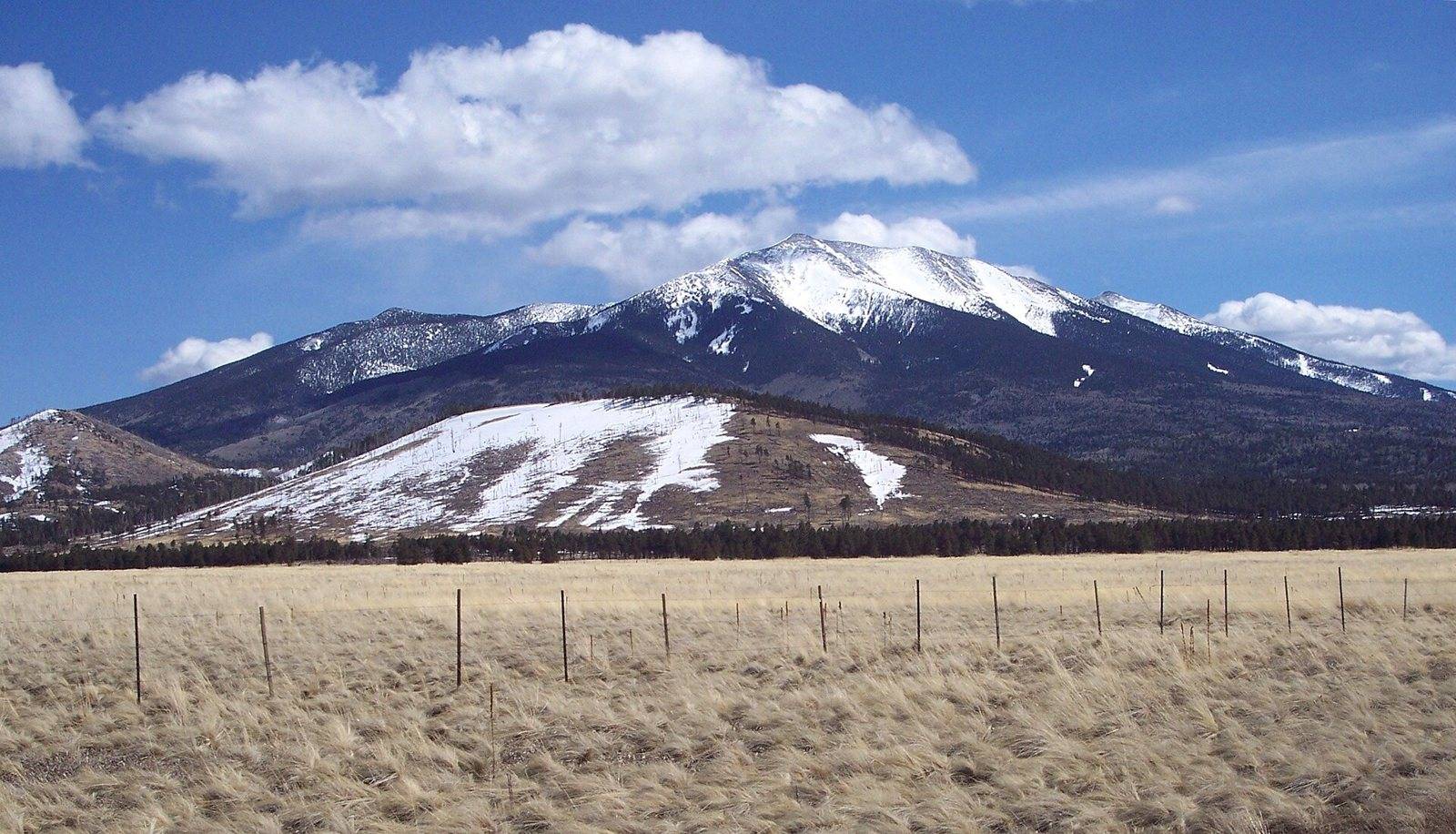
The San Francisco Peaks
A collapsed volcano, golden aspens in October and ski slopes that can take 31 inches in one storm.
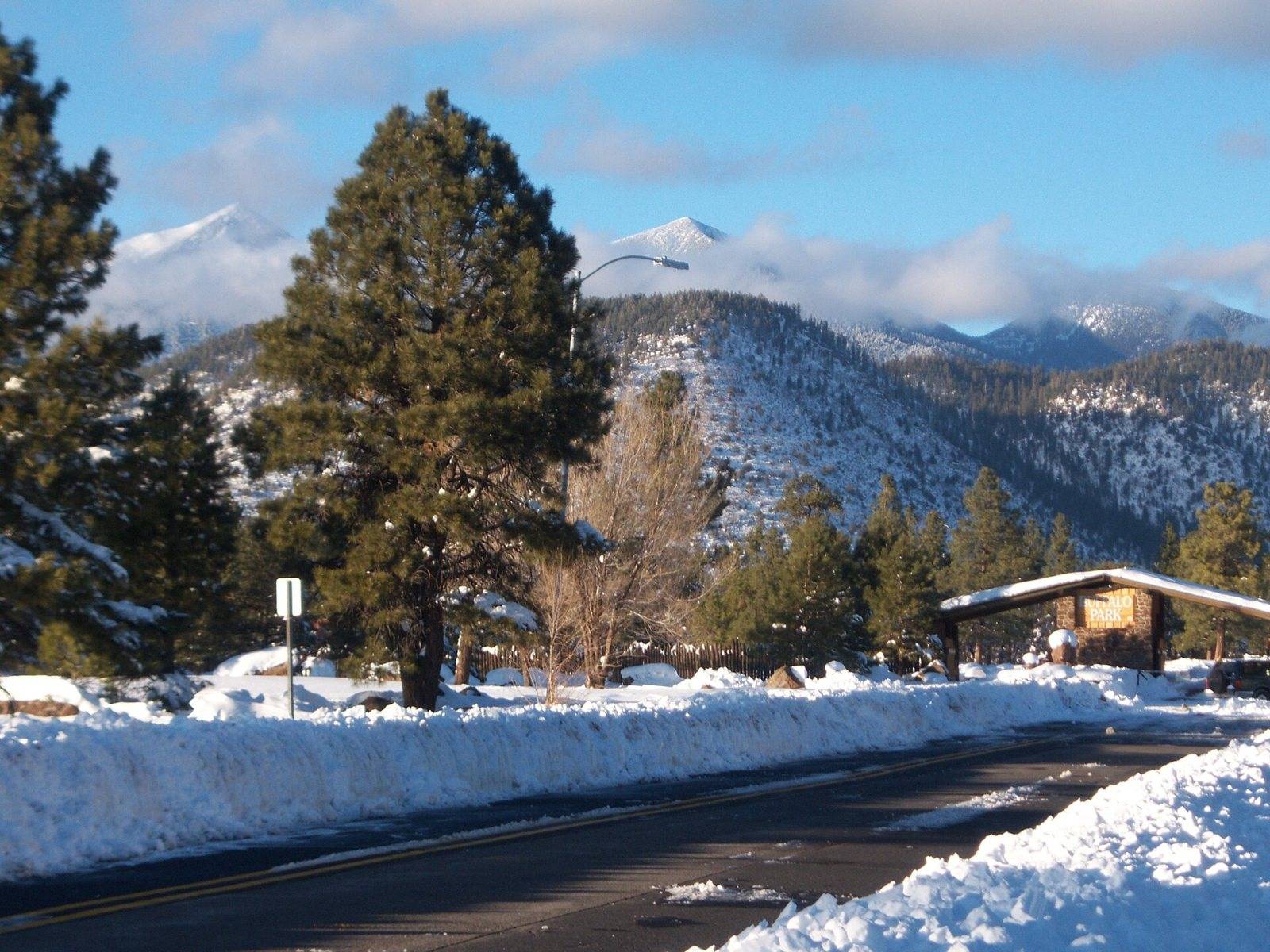
Winter in Flagstaff
Higher than Denver, fed by Pacific storms and the Mogollon Rim, and still learning to plow around bike lanes.
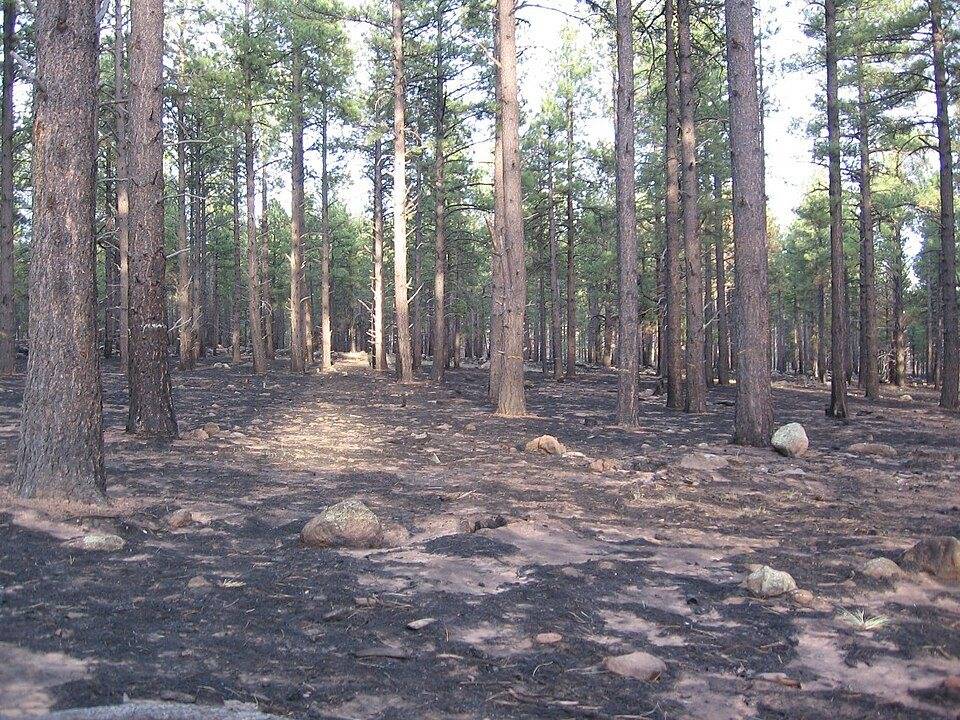
The Coconino National Forest
Ponderosa pine, Fort Valley's mule packed beginnings and why foresters now thin the trees they once planted.


