Anne Newland worked in Kabul in July 2010 as part of the Afghanistan Higher Education Project, running sessions on teaching for the faculty of Kabul Medical University and joining pediatric teams at Maiwand Hospital. That same year a separate American visitor, the English teacher Jaala Thibault, began training Afghan professors at Kabul Education University under the State Department's English Language Fellows Program, and in a January 2012 essay for The New York Times1 she described what a Kabul classroom looked like by then. Young men and women studied side by side, men and women both taught, and the most pressing problem before one short course was finding enough chairs for everyone who wanted to attend.
Classrooms before and after 2001
Thibault set that scene against accounts from her colleagues and students of the years before 2001. Schools and universities across the country then taught only religious subjects, girls and women were barred, and women who kept teaching girls did so in hidden rooms at serious risk1. One male professor told her that philosophers, linguists and mathematicians had all been made to teach religion, as if the university were a madrassa; by 2012 he was teaching Shakespeare and Dostoyevsky. A woman professor who had left to teach at a university in Tehran had returned to her old post.
“A diverse education is better for the students.”A Kabul professor, quoted by Jaala A. Thibault in The New York Times, 2012, The New York Times
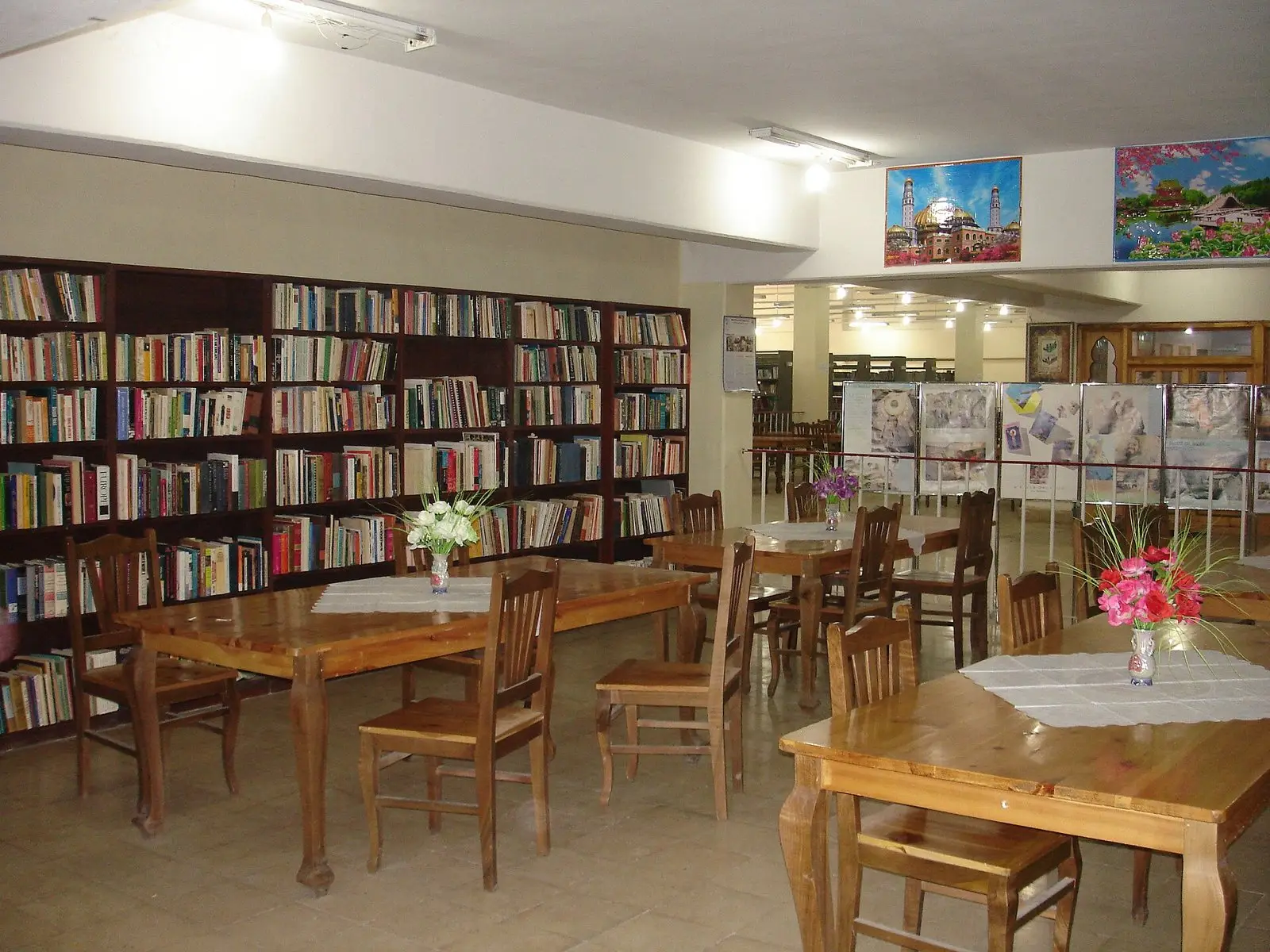
Kabul Medical University and its library
Most Afghan doctors are educated at Kabul Medical University, according to an August 2010 New York Times report on a textbook drive2. Medical libraries had been stripped over nearly three decades, and military medical personnel told the paper that factions of the Taliban, which ruled from 1996 to 2001, had singled out medical texts for destruction because drawings of the human body were considered blasphemous. Valerie Walker, director of the medical alumni association at the University of California, Los Angeles, said monitors had even checked classroom blackboards for anatomical drawings. In January 2008 a Navy doctor in Afghanistan reported that the shortage of textbooks left medical students relying almost entirely on lecture notes and memorization2.
The response was a library rebuilt box by box. A Navy ophthalmologist in Kabul, Cmdr. David Beverly, told the Times he had received 30 boxes for Kabul Medical University and the nearby Afshar Hospital, and that a residency in family medicine had started there using the donated books2. Training of that kind depends on the same supports as residencies elsewhere: current references, supervised patients and teachers who know how to teach, as the entry on how residency programs are accredited describes for the United States.
How the textbooks reached Kabul
The project, Operation Medical Libraries, began in April 2007 with an email to the UCLA medical alumni association from Lt. Col. Laura Pacha, a 1998 graduate serving overseas as an Army medical officer, describing crippled medical libraries2. Walker arranged for a campus bookstore to collect donations, and the first shipment came to 2,000 volumes. By 2010 the effort had been taken up by 30 universities and hospitals and more than a dozen professional organizations, and Walker estimated that at least 27,000 texts had reached Afghanistan. Books on anatomy, medicine, nursing, dentistry, pharmacology and physical therapy were all in demand, especially those published in the previous five years. Some went on to libraries in Mozambique, the Solomon Islands and Uganda2.
- 1Find a volunteer A donor looks up a military volunteer's address on the project's website.
- 2Ship by mail The donor mails books at domestic bulk rates of about 50 cents a pound.
- 3Receive in country The volunteer collects the boxes, with no customs fees or taxes.
- 4Deliver Books go to libraries such as Kabul Medical University and Afshar Hospital.
Gaps that sent patients abroad
Thin training at home shows up in what doctors cannot offer. In November 2013, a New York Times report from New Delhi by Max Bearak3 followed the family of a 23 year old medical student from a university in Herat whose psychiatric illness had not responded to treatment; Kabul's clinics and hospitals told them there were no further options in the country. Hundreds of thousands of Afghans had made the same trip to Delhi's private hospitals, helped by a free Indian medical visa introduced in 2005. The Indian Embassy in Kabul reported more than 100,000 medical visas issued from the start of 2010 to late 2013, about half of all Afghan visas to India, and twenty flights a week linked the two capitals3. Specialist training, mental health above all, was where the gap was widest.
Training counsellors for mental health
One answer was to train a different workforce. In 2015 Sune Engel Rasmussen reported in The Guardian4 that the International Psychosocial Organization in Kabul had trained 280 psychosocial counsellors working across the country, half of them women, under project manager Fareshta Quedees. Quedees had discovered counselling in 2004 while still in medical school, working as a translator for a foreign aid group. A UN sponsored survey had found that 16.5 percent of Afghans had a mental disorder in 2005, and the government had made mental illness a priority, with counselling offered at every provincial hospital4. Counsellors came to Kabul from provinces such as Zabul, Paktia and Herat for five day training courses.
- 1996 to 2001Universities teach only religious subjects and bar women
- 2005India introduces a free medical visa for Afghan patients
- 2007Operation Medical Libraries begins shipping textbooks
- 2010A residency in family medicine in Kabul is using donated books
- 2015280 psychosocial counsellors are working across the country
- 2022Women are barred from attending university
- 2024Afghan women resume medical studies at Scottish universities
What continuity in training requires
The record shows how quickly training can be interrupted and how long it takes to restart. In 2022, BBC News reported in October 20245, the Taliban banned women from attending university, cutting off medical students in the middle of their studies. The Linda Norgrove Foundation, a charity based on the Isle of Lewis, worked with the UK and Scottish governments to arrange visas and medical school places so that some of those students could continue in Scotland5. Continuity also lives in people who keep teaching others. Thibault wrote in July 20126 of three Kabul students who ran a tutoring school in a western Kabul neighborhood for two years, teaching English, math and science after regular school hours, while still at university, and of one who went on to a master's degree in educational counseling in India; she herself kept returning for teacher training workshops1. Libraries need restocking every few years, residents need faculty who stay, and students need a classroom that remains open long enough for them to finish. Related entries on residencies, accreditation and teaching are gathered under Training the Next Doctors.
References
- Changes in Kabul Classrooms. The New York Times, 1327.
- Doctors Heed Call for Books for Afghanistan (Published 2010). The New York Times, 2010.
- India a Hub for Patients From Afghanistan. The New York Times, 1383.
- Afghanistan tackles hidden mental health epidemic | Sune Engel Rasmussen. The Guardian, 2015.
- Afghan women resume medical dreams in Scotland. BBC, 2024.
- In Afghanistan, a Generation of Hardship and Hope. The New York Times, 1343.
Further reading online
- The New York TimesChanges in Kabul Classrooms
- The GuardianAfghanistan tackles hidden mental health epidemic | Sune Engel Rasmussen
- BBCAfghan women resume medical dreams in Scotland
Related entries
Where Doctors Settle After Training
Retention tables and survey models show residency location carries the most weight in where physicians end up.
Rural Training Tracks
Small town residency designs from Pennsylvania to British Columbia, the networks behind them and what their graduates do.
How Residency Programs Are Accredited
The council that approves American residencies, the 2020 merger of two systems and the evidence its reviewers weigh.

